

Hey there! As a supplier of deep well submersible pumps, I often get asked about the different components of these pumps and what they do. One of the most important parts of a deep well submersible pump is the impeller. So, let's dive into what the function of the impeller in a deep well submersible pump is.
What is an Impeller?
First things first, what exactly is an impeller? Well, an impeller is a rotating component with vanes or blades that's designed to transfer energy from the motor to the fluid being pumped. It's like the heart of the pump, because without it, the pump wouldn't be able to move water effectively.
In a deep well submersible pump, the impeller is located inside the pump housing. When the pump is turned on, the motor powers the impeller, which starts to spin at high speeds. As the impeller spins, it creates a centrifugal force that pushes the water outwards from the center of the impeller towards the outer edges. This movement of water is what allows the pump to draw water from the well and push it up to the surface.
The Key Functions of the Impeller
1. Creating Flow
The primary function of the impeller is to create flow within the pump. By spinning at high speeds, the impeller sucks water into the pump through the intake and then forces it out through the discharge outlet. This continuous movement of water is essential for getting water from the deep well to wherever it's needed, whether that's for irrigation, household use, or industrial applications.
Think of it like a fan. When you turn on a fan, the blades spin and create a flow of air. Similarly, the impeller in a deep well submersible pump spins and creates a flow of water. The faster the impeller spins, the greater the flow of water that can be achieved.
2. Increasing Pressure
Another important function of the impeller is to increase the pressure of the water. As the water is pushed outwards by the centrifugal force of the spinning impeller, it gains kinetic energy. This kinetic energy is then converted into pressure energy as the water is forced through the narrow passages in the pump housing and out of the discharge outlet.
The increased pressure is what allows the water to travel up the well and through the pipes to its destination. Without the impeller increasing the pressure, the water would simply stay in the well or wouldn't be able to reach the desired height or distance.
3. Efficient Water Transfer
The design of the impeller plays a crucial role in ensuring efficient water transfer. The shape and size of the vanes or blades on the impeller are carefully engineered to optimize the flow and pressure of the water. A well - designed impeller can minimize energy losses and maximize the amount of water that can be pumped with a given amount of power.
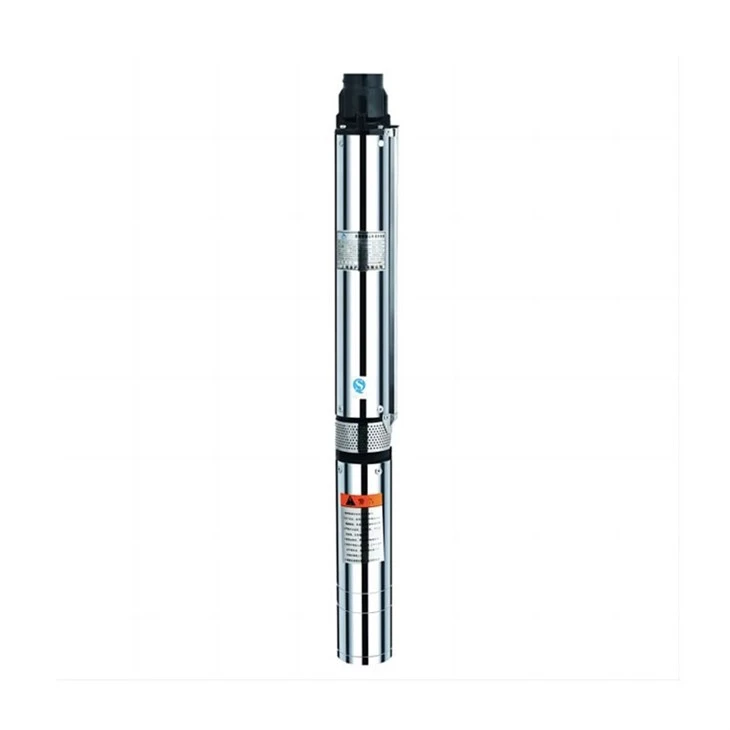

For example, some impellers have curved vanes that are designed to smoothly guide the water from the intake to the discharge, reducing turbulence and improving efficiency. This means that the pump can use less energy to pump the same amount of water, which is not only better for the environment but also saves money on electricity bills.
Different Types of Impellers in Deep Well Submersible Pumps
There are several types of impellers that can be used in deep well submersible pumps, each with its own advantages and applications.
1. Closed Impellers
Closed impellers have shrouds on both sides of the vanes, which helps to direct the flow of water more efficiently. They are commonly used in applications where high pressure and efficiency are required, such as in industrial pumps or pumps for high - rise buildings. Our Three Phase Deep Well Submersible Pump often comes with closed impellers to ensure reliable and efficient operation.
2. Open Impellers
Open impellers do not have shrouds, which makes them less efficient than closed impellers but more resistant to clogging. They are a good choice for pumping water that contains solids or debris, such as in sewage or irrigation applications.
3. Semi - open Impellers
Semi - open impellers have a shroud on one side of the vanes. They offer a balance between the efficiency of closed impellers and the clog - resistance of open impellers. They are commonly used in a variety of applications, including residential water supply. Our Stainless Steel Deep Well Submersible Pump may be equipped with semi - open impellers for optimal performance.
Factors Affecting Impeller Performance
1. Design and Size
The design and size of the impeller have a significant impact on its performance. A well - designed impeller with the right number of vanes, the correct angle of the vanes, and the appropriate size can achieve better flow and pressure characteristics. If the impeller is too small, it may not be able to create enough flow or pressure. On the other hand, if it's too large, it may require more power to operate and could lead to inefficiencies.
2. Material
The material of the impeller is also important. Impellers are typically made from materials such as stainless steel, cast iron, or plastic. Stainless steel impellers are corrosion - resistant and durable, making them suitable for use in wells with corrosive water. Cast iron impellers are strong and can handle high pressures, but they may be prone to rusting. Plastic impellers are lightweight and inexpensive, but they may not be as durable as metal impellers. Our Electric Deep Well Submersible Pump uses high - quality materials for the impellers to ensure long - lasting performance.
3. Speed of Rotation
The speed at which the impeller rotates affects its performance. Generally, a higher rotational speed will result in greater flow and pressure. However, there are limits to how fast the impeller can spin, as excessive speed can lead to cavitation. Cavitation occurs when the pressure of the water drops below its vapor pressure, causing bubbles to form. These bubbles can collapse and cause damage to the impeller and other pump components.
Maintaining the Impeller
To ensure the long - term performance of the impeller and the pump as a whole, proper maintenance is essential. Here are some tips for maintaining the impeller:
- Regular Inspection: Periodically check the impeller for signs of wear, damage, or clogging. If you notice any issues, such as chips in the vanes or debris stuck in the impeller, it's important to address them promptly.
- Cleaning: Keep the impeller clean by flushing the pump regularly. This can help prevent the buildup of dirt, sediment, and other debris that can affect the performance of the impeller.
- Lubrication: If the impeller has bearings or other moving parts, make sure they are properly lubricated according to the manufacturer's recommendations.
Conclusion
In conclusion, the impeller is a vital component of a deep well submersible pump. It plays a crucial role in creating flow, increasing pressure, and ensuring efficient water transfer. By understanding the functions and characteristics of the impeller, you can make more informed decisions when choosing a deep well submersible pump for your needs.
If you're in the market for a high - quality deep well submersible pump, we're here to help. We offer a wide range of pumps, including Three Phase Deep Well Submersible Pump, Stainless Steel Deep Well Submersible Pump, and Electric Deep Well Submersible Pump. Our pumps are designed with high - quality impellers to provide reliable and efficient performance. Contact us today to discuss your requirements and start the procurement process.
References
- Hydraulic Institute. (202X). Standards for Centrifugal Pumps.
- Pump Handbook, 4th Edition. McGraw - Hill.


