


TIG Welding Machine
ROLWAL: a Professional TIG Welding Machine Manufacturer
Our company was established in 1990 and is located in Daxi, the hometown of pumps in China. We have self-operated import and export rights.
Variety of Products
We can provide customers with various types of water pumps, welders, and motors, such as centrifugal pumps, peripheral pumps, self-priming jet pumps, deep well submersible pumps, submersible sewage pumps, MMA welding machine, MIG welding machine, TIG welding machine. We can also provide portable car battery chargers.
Professional Production Equipment
Our factory is equipped with many types of equipment, including production lines, processing centers, testing centers, etc. We have also arranged professional production personnel to monitor all aspects to ensure the high quality of each product.
Rich Market Experience
Our company has established export trade relationships with customers in many countries and regions, and our products are sold to the Middle East, Southeast Asia, Europe, Africa, South America and other places. Our products have received favorable comments from many customers.
Multiple International Certifications
Various products such as water pumps, welding machines, and motors we produce have passed ISO9001 and CE certification. At the same time, we have professional design and production teams that continuously develop and innovate new products.


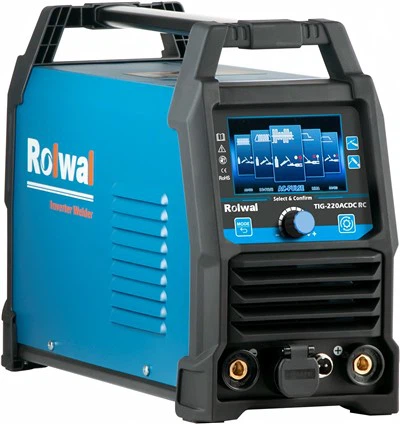


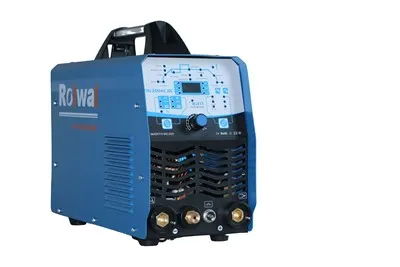
Tungsten inert gas welding (TIG welding) is another welding process that uses electricity to melt and join pieces of metal. TIG welding machine is applied in all industrial sectors but is especially suitable for high quality welding. In manual welding, the relatively small arc is ideal for thin sheet material or controlled penetration (in the root run of pipe welds). TIG welding is also widely applied in mechanised systems either autogenously or with filler wire. However, several 'off the shelf' systems are available for orbital welding of pipes, used in the manufacture of chemical plant or boilers. The systems require no manipulative skill, but the operator must be well trained.
How TIG Welding Works
TIG welding uses electricity to create an arc (a short circuit) between a non-consumable tungsten electrode (a positive anode) and the metal being welded (a negative cathode). The arc is shielded by a flow of inert gas, typically argon. TIG also known as gas tungsten arc welding – GTAW – is a process of joining pieces of metal together through a welding current. An inert gas is supplied to the welding torch that flows along the arc to protect the metals from oxidation and from forming small, circular gaps.
Components Used in TIG Welding
The various components of TIG welding include:
Power Source
The power source is the primary equipment unit in TIG welding, requiring a high-current power supply. TIG welding utilises AC and DC power sources, with DC current commonly used for materials such as stainless steel, mild steel, copper, titanium, and nickel alloys. Alternating current is suitable for aluminium, aluminium alloys, and magnesium. The power source typically comprises a transformer, rectifier, and electronic controls, with voltage requirements ranging from 10 to 35 V and current ranging from 5 to 300 A to ensure proper arc generation.
TIG Torch
The TIG welding torch is a crucial component of the process, consisting of three main parts: the tungsten electrode, collets, and nozzle. The torch can be either water-cooled or air-cooled, depending on the application. The collet securely holds the tungsten electrode and comes in various diameters to match the electrode size. The nozzle facilitates the flow of the arc and shielding gases into the welding zone, featuring a small cross-section that promotes a highly intense arc. The nozzle requires periodic replacement as it wears out due to the presence of intense sparks during welding operations.
Shielding Gas Supply System
In TIG welding, argon or other inert gases are typically utilised as shielding gas. The primary function of the shielding gas is to protect the weld from oxidation by preventing the ingress of oxygen or other atmospheric air into the welded zone. The choice of inert gas depends on the specific metal being welded. A system is in place to regulate the flow of the shielding gas into the welding zone, ensuring proper protection and control during the welding process.
Filler Material
When welding thin sheets in TIG welding, filler material is often not required. However, for thicker welds, filler material in the form of rods is manually fed into the weld zone. These filler rods serve to provide additional material and strengthen the weld as needed.
Benefits of TIG Welding Machines
High-Quality Welds
The method’s inherent characteristics enable welders to achieve better control over the welding process, thereby yielding remarkably robust and long-lasting joints. This then means that the weld is unlikely to fracture and crack.
01
Precise Control
TIG welding provides precise control over the heat input, welding speed, and filler metal deposition. This level of control is especially beneficial for welding thin materials and intricate joints. The more control the welder has the more easier the weld will be to complete.
02
No Flux Required
Unlike some other welding methods, TIG welding does not require any flux. By not using any flux the welder doesn’t need to have to take up extra time trying to clean the weld so that it looks presentable, because of this they are able to increase their overall output.
03
Versatility
TIG welding can be used on a wide range of metals, including stainless steel, aluminum, copper, and even exotic metals like titanium and magnesium. Due to this wide range of metals that can be TIG welded, it means that most jobs are able to be tackled with the use of a TIG welder.
04
Clean Welds
The use of an inert gas shield prevents the weld from reacting with atmospheric elements, resulting in clean and oxidation-free welds. The cleaner the weld is the stronger and more presentable the weld is, because of this the piece of work can go for a higher price than those which would have issues such as porosity.
05
Due to its vast usage with different metals and alloys, TIG welding is applied in a variety of industries to create or repair metallic items. In this regard, this article enumerates some of the applications of TIG welding.
Aerospace
Aircraft, as well as spacecraft, is partly made of magnesium metal. TIG welding is widely used in its fabrication for its high precision and unbeatable strength. TIG welding has the ability to fuse the intricate airplane parts and the plane’s skin while still enhancing its much valued aesthetic value. This method is most preferred in welding aircraft parts.
Art and Craft
Art is all about appealing and attractive finishes. Sculptures and industrial fixes need nothing less than a smooth finish to enhance their cosmetic appearance. TIG is the number one go-to welding process when working on a piece of art. Most artists recommend it as it works best with metals of minimal thickness producing a strong structure with a smooth finish.
Automobile Industry
Safety is always prioritized in the making of automobiles. This ensures the vehicles stand the test of time while serving their purpose. One of the advantages of TIG welding is making rust-resistant metal fusion. This ability is widely applied in the automobile industry to avoid rusting of crucial vehicle parts. Additionally, it strengthens the bond making it tough and therefore safer.
Food Manufacturing Industry
ISO 22000 stipulates that food manufacturing industry utilize stainless steel in their manufacturing and packaging processes. TIG welding has been found to be the best welding process in making and repairing stainless steel made equipment and packaging material. This is a must-know basic knowledge in food industry engineering.
Building and Construction
In this time and age, construction has shifted from the common building blocks and concrete to more complex and much more efficient processes accommodating materials like aluminum and steel. Skyscrapers were the pioneer of this transition. The fabrication of these aluminum glass panel and steel staircase railings are made using TIG welding technique.
Guide for Selecting a TIG Welding Machine
There are two modes of TIG welding:
● Direct Current (DC), used for all metals except Aluminium, and magnesium alloys.
● Alternating Current (AC), used for Aluminium and magnesium alloys only.
The first question then is “Is aluminium welding a requirement?”
If yes, then a machine capable of AC is required. Most modern AC welding machines are inverter types, which also have DC capacity. So, an AC/DC TIG machine will be able to weld most metals. If welding of aluminium is not necessary, then a DC-only TIG machine will be suitable.
TIG welding requires insert gas shielding, so a method of connecting gas and introducing it into the weld is required. More sophisticated machines will have an in-built gas valve, which the machine will turn on when the torch trigger is pressed. These machines will usually have added features of post gas and pre-gas where the user can set a time – usually seconds – to add gas to purge the weld areas before welding is started, and continue gas flow to prevent oxygen contaminating the weld pool, and allow weld pool cooling at the end of the weld. The less sophisticated machine has no in-built gas valve and will require a torch with in-built manually operated valve. Another question to ask yourself is, ‘how much TIG welding is going to be done, and are the benefits of a gas valve needed?’ If TIG welding is the main task, then a machine with a gas valve will be necessary. If TIG welding is only required for occasional jobs, or a long-weld job, i.e. in cladding applications, then the manual gas valve might be quite adequate.
For TIG welding arc starting is a major consideration. There are three styles of starts.
● Scratch Start– This is an older style of starting technique usually associated with a transformer type machine. Not as common now with inverter machines.
● Lift Start– This type of start is possible with an inverter machine. The tungsten is gently touched on the job, the control circuit senses the touch and waits for the tungsten to be lifted off the job, and then quickly ignites the arc for welding.
● HF Start– The HF start allows the arc to be started without the tungsten touching the job. This feature can be important if the risk of tungsten contamination of the job is an issue, like pressure vessel welding.
There are four different scenarios for remote control of TIG machines:
● No remote control – Starting is by lift arc, gas is by manual valve, current adjustments is set using the machine control panel.
● Remote torch trigger control – Starts the pre-gas sequence HF start, or lift arc. Then end of weld sequence.
● Remote torch trigger and current control – The torch remote trigger starts the pre-gas sequence HF start, or lift arc. Current adjustment can also be controlled from torch during welding, which can be useful to control the heat into the weld, particularly aluminium where extra heat is required at start of weld to preheat.
● Remote foot control of arc starts and current – Foot control unit can be connected to the machine via the same connector as the remote torch. Pressing the foot control pedal starts the arc, then further depressing of the pedal increases the current. This allows hands-free current control and fine adjustments while welding.
AC welding inverter machines uses high current electronic switches, usually IGBT, to create an AC weld output. The AC frequency can be varied, typically to 30-150Hz. A high-frequency AC can be used to focus the arc, which is useful on thin material and TIGht corners. Good control of AC balance, or the amount of positive cycle to negative cycle, is important. Changing the balance is important for effecting the amount of surface cleaning the arc performs.
Determining what size machine can be a balance between daily use expectation and possible one-off, large job expectations, as well as cost. If only welding thin wall steel tube, a 140A might be quite adequate, whereas 5mm aluminium would require at least 200A.
The duty cycle of a machine is an indication of the machines ability to operate for extended time. The duty cycle is defined as the time the machine can operate at maximum output in 40C ambient temperature, over a 10-minute cycle. The duty cycle is expressed as a percentage. So, a 20% duty cycle, is maximum current for two minutes, then eight minutes with no current, then repeat. If the output current is lower than, the duty cycle is increased. The machine specification will give maximum duty cycle, and current, 100% duty cycle current, and often 60% duty cycle current. This data will help determine requirements. If the application is a lot of small joints each requiring some set up time then, a duty cycle of 20 per cent will quite adequate. When welding large cladding jobs, then a higher duty cycle would be recommended.
Avoid Downtime: Proper Maintenance Tips for TIG Welders
It’s good practice to set up preventative maintenance for your welding machine; the question is, how? Here’s our guide and checklist on keeping a TIG welder in peak operating capacity.


Read the Manual
Our guide here is, by necessity, generic and nonspecific. There are many different TIG welding machines, as well as multi-function machines, automated machines, and more, made by different manufacturers and to different specifications. As such, our advice can only cover so much ground for your specific machine. Reading the manual (particularly any section about the care and maintenance of the machine) will give you more specific instructions you should follow. Always let the manual guide you, and trust it more than you trust the random content you find on the internet.
Perform Regular Inspections
A key element of preventive and proactive maintenance is routine inspections. Inspections give you a checklist of elements of a welding machine to check for their condition, functionality, and quality; by checking on a regular basis, you will be able to notice any damage or potential problems before they become failures or hazards. It’s very likely that the manufacturer has provided a checklist of elements of the welding machine to inspect, as well as how often they should be inspected. This information should be in your manual and, if not, should be available on the manufacturer’s website. If no such checklist is available, you can use the rest of this list as a place to start and adapt it to the needs of the machine you’re using.
Perform Maintenance and Inspections Safely
Whenever you perform an inspection or maintenance of a welding machine, make sure you’re doing so safely. In general, this means two things:
● Cut the power before inspecting the machine to ensure there is no risk of shock. Remember, you’re looking for damage and wear; you can be shocked and unexpected if something that shouldn’t be energized happens to be.
● Give the machine time to cool off before inspecting it, if necessary. Many inspections are done before using the machines, not after, to avoid heat hazards.
Safety is paramount in welding, as the hazards of high electricity and heat can be painful and even fatal. Take it seriously.
Keep Your Machine Clean
Cleaning is one of the most important parts of maintenance for a welding machine. Cleaning should involve two processes. The first is to keep the exterior of the machine clean and free of debris. Welding generates sparks and debris, and a working shop generates a lot of various sorts of dust, fumes, and other particulate matter that can settle on a welding machine. Moreover, anything continually energized can end up electrically charged and attract particles from the air. You should routinely – at the end of the day, or at least once a week – use a soft, non-abrasive cloth to wipe away dust and debris from your welding machine. Not only does this keep it clean and free of potential issues, it helps make the machine easier to handle and use. Avoid using chemicals or cleaners unless absolutely necessary, as they can damage the surface of the welder or, in extreme cases, damage circuitry or other elements of the machine. Depending on the operational duty cycles of the machine, as well as the expansiveness of your shop and how much debris is created, you will need to open up and vacuum out or blow out the interior of the machine to prevent build-up from causing short circuits, fire hazards, or other damage. In heavy-use conditions, this should be done as often as once per month; otherwise, it can be left for at most six months in between cleanings.
Maintenance Steps Before Each Use
Whenever you use your TIG welding machine, you should perform basic inspections to make sure everything is in good working condition and there are no obvious hazards. Here are some of the things you should do before each use:
● Inspect all connections and connectors. Make sure nothing is loose, fraying, or breaking, particularly the insulative layer around power-carrying cables. Make sure connections are secure. If anything is loose or worn, it can cause issues, including lower-than-intended gas pressures, potential unexpected disconnects, or even shock hazards.
● Inspect your cables. Look for any potential damage to cables that could be hazards or could unexpectedly cease operation.
● Check your tungsten electrode. Electrodes, while not consumable, can still be damaged. In fact, certain welding operations like welding aluminum involve “balling” the electrode or melting the tip away from a sharp point and into a ball. While this is effective for welding aluminum, it makes the electrode worse for all other applications and means it should be replaced before non-aluminum operations.
● Check your filler supplies. Ensure that you have enough of your consumable filler wire to perform any project you’re working on. For wire-feed systems that use wire spools, make sure the wire is free of kinks and tangles that could clog the works and halt operations.
● Check your gas supply. TIG welding requires an inert gas to protect the weld pool, so you must have an adequate supply of that gas on hand for your project.
If you’re performing several operations in succession, you can skip some of these, but it’s good practice to make sure that you perform these inspections any time the machine has been idle for more than a short time.
Daily Maintenance Tips
Each day, when you’re set to use your TIG machine for welding a project, perform inspections. In addition to the above, you should also:
● Calibrate the weld head. Total machine calibration should be performed on an annual basis, but more specific calibration of the weld head is important to do before starting a day’s work so that it doesn’t end up out of alignment or specification over the course of the previous day’s work.
● Check and, if necessary, replace any worn parts. While TIG does not have consumable electrodes the way other processes do, the electrodes can still be damaged and need replacing. Additionally, other parts of the torch, exposed to heat and current, can wear or be damaged and require replacing. Look at and replace, if necessary, the electrode, the collet, the gas lens, and other parts of the torch in particular.
● Verify electrical connections and ensure that no plugs or joints have come loose through the previous day’s operations.
If all else is handled properly, your daily checklist should be minimal and shouldn’t identify any issues. However, there’s always the chance that the unexpected can happen: someone accidentally damaged and tried to hide the machine, or another issue occurs. Inspections prevent accidents.
Weekly or Monthly Maintenance Schedule
Weekly and monthly inspections and maintenance involve checking parts of the machine that are either harder to get to, require sporadic maintenance or replacement, or are longer-term wear parts. For example:
● Inspect the wire feed system. Check to make sure the rollers are clean and clear to avoid anything that can gum up the wire. Make sure the wire is correctly sized for the liner. Blow out the feed mechanism to remove debris if necessary. If any issues are occurring, consider a replacement feeding system.
● Open and blow out the machine to remove dust, debris, and other potential hazards. The build-up of dust and particulate matter can be a fire hazard, but more than that, it’s insulative. That means the machine won’t be able to dissipate heat as effectively, which in turn means that it will have shorter duty cycles and may even be prone to shutting down due to triggering safety overrides.
● Inspect hoses for leaks and replace them if necessary. Primarily, this means the gas hose; however, some machines also have a water supply hose to use as a coolant source. If your machine is water-cooled in this manner, check the water hose as well. Remember that water and electricity mix poorly, so any leak can be a major hazard.
● Inspect the coolant system. Many TIG machines have liquid cooling mechanisms today, and while they may be designed to be largely self-contained, they can still lose coolant over time. Make sure to top off the coolant levels if they’re low. Critical note: Make sure to use the right kind of coolant; you can’t just put water in a machine if it isn’t designed to use water as a coolant.
Finally, you should also check any safety features of the machine. Fuses, circuit breakers, interlocks, and other safety devices can feel like they get in the way of efficient operation; however, nothing hurts your daily operations more than an operator getting hurt. Safety is absolutely essential when dealing with something with as many potential hazards as welding.
Annual Maintenance Schedule
Each year, the machine should be scheduled for downtime for a complete servicing. This will involve a total rundown of the entire machine, top to bottom and inside and out, including all cables, hoses, connectors, and other accessories. This process should be essentially the same as all of the above, except more thorough and with greater attention to detail. This is also where small faults or minor deferred maintenance should be completed or repaired. This is also where more detailed calibrations should be performed as necessary. Calibrating the power system, for example, is usually an annual task. It’s also possible that the manufacturer recommends annual replacement of the regulator and other non-consumable parts that are nevertheless subject to wear. If you don’t have the tools, resources, or knowledge to fully calibrate and test every aspect of your welding machine, there’s a good chance that the manufacturer does. Most manufacturers offer maintenance plans or packages that involve a tech coming out to evaluate a system and perform more in-depth repairs than what the average operator generally does on their own. Annual servicing can be a good idea to outsource for the longevity of your machine. Finally, check with the manufacturer to make sure there are no recalls or other issues with the machine you’re using. It’s rare but possible that your machine could be subject to a recall and should be returned and replaced.
Our Certificate
Below are our certificate:


Our Factory
Below are our factory:


FAQ
Q: When should TIG welding be used?
Q: What makes TIG welding so hard?
Q: How many metals can TIG weld?
Q: Can you use a TIG welder without gas?
Q: What is the best angle for TIG welding?
Q: What is the distance between TIG welding?
Q: Why is TIG welding slow?
Q: What gas is needed for TIG?
Q: Do you need oxygen for TIG welding?
Q: What is the maximum temperature in TIG welding?
Q: What are the limitations of TIG welding?
*A high degree of operator skill is required to produce quality welds.
*Process is not easily automated.
Q: Can you TIG outside?
Q: What happens when you TIG without gas?
Q: Is it better to TIG weld uphill or downhill?
Q: What shade level for TIG?
Q: How much argon flows for TIG welding?
Q: Why do you need AC for TIG welding?