


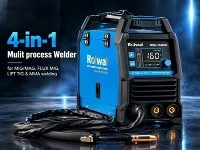


CUT Welding Machine
ROLWAL: a Professional Battery Charger Manufacturer
Our company was established in 1990 and is located in Daxi, the hometown of pumps in China. We have self-operated import and export rights.
Variety of Products
We can provide customers with various types of water pumps, welders, and motors, such as centrifugal pumps, peripheral pumps, self-priming jet pumps, deep well submersible pumps, submersible sewage pumps, MMA welding machine, MIG welding machine, TIG welding machine. We can also provide portable car battery chargers.
Professional Production Equipment
Our factory is equipped with many types of equipment, including production lines, processing centers, testing centers, etc. We have also arranged professional production personnel to monitor all aspects to ensure the high quality of each product.
Rich Market Experience
Our company has established export trade relationships with customers in many countries and regions, and our products are sold to the Middle East, Southeast Asia, Europe, Africa, South America and other places. Our products have received favorable comments from many customers.
Multiple International Certifications
Various products such as water pumps, welding machines, and motors we produce have passed ISO9001 and CE certification. At the same time, we have professional design and production teams that continuously develop and innovate new products.


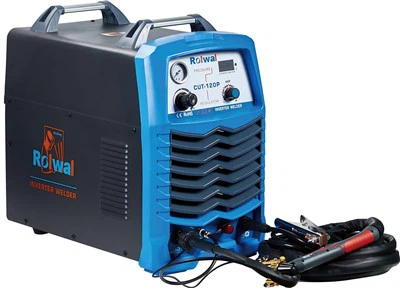


This product is a welding machine that operates by sending an electric arc through a gas--oxygen, nitrogen, argon, or shop air--passing through a constricted opening. The combination of high-pressured gas flow and the electric arc results in a “plasma jet.” The jet quickly reaches temperatures as high as 40,000℉, enabling it to cut through a metal workpiece and blow away the molten material. The plasma cutter also directs the gas around the perimeter of the cutting area to shield the cut. A hand-held plasma cutting torch is often used to quickly cut through sheet metal, plates, bolts, pipes, and a long list of other purposes. They are excellent for removing faulty welds or back-gouging weld joints.
The Plasma Cutting Process
The plasma cutting process begins with the power supply, which creates an electric circuit that sends an electric current through the pilot arc. The pilot arc ionizes the gas flowing through the torch, creating a plasma arc. The plasma arc then flows through the nozzle, which focuses the plasma and increases its velocity. The plasma arc then comes into contact with the workpiece, which causes the metal to heat up and melt. The high-velocity plasma then blows the molten material away from the cut, creating a clean, precise cut. During the cutting process, the plasma arc generates a significant amount of heat, which can cause the metal to melt and create a kerf. The kerf is the width of the cut, which is determined by the size of the nozzle and the amount of airflow through the torch.
Gas and Airflow in Plasma Cutting
Plasma cutting is a process that uses a high-temperature, high-velocity jet of ionized gas to cut through metal. The gas used in plasma cutting is typically compressed air, nitrogen, argon, or oxygen. The gas is forced through a small nozzle at high pressure, which creates a plasma arc that melts and vaporizes the metal.
Types of Gases Used
The gas used in plasma cutting can affect the quality of the cut and the speed of the process. Compressed air is the most common gas used in plasma cutting because it is readily available and affordable. Nitrogen is also commonly used because it produces a high-quality cut and is less likely to react with the metal being cut. Argon is used for cutting non-ferrous metals such as aluminum, copper, and brass. Oxygen is used for cutting thicker metals, as it produces a faster cut speed and can be used at higher amperages.
Airflow Management
Airflow management is an important aspect of plasma cutting. The flow of gas through the nozzle affects the shape and quality of the plasma arc. The nozzle has a series of vent holes that control the flow of gas and create a vortex that helps to stabilize the arc. The pressure and flow rate of the gas must be carefully controlled to ensure a clean and accurate cut. In addition to the gas used for cutting, a shielding gas is also used to protect the cut from oxidation and regulate the unpredictable nature of plasma. The cutter nozzle has a second set of channels that release a constant flow of shielding gas around the cutting area. The pressure of this gas flow effectively controls the radius of the plasma beam.
The Parts and Components of a Plasma Cutter Welding Machine
You might think that a plasma cutter is a complex and enormous machine. Fortunately, the reality is that plasma cutters aren’t necessarily huge, and while they can be complex, they’re not all that difficult to understand. In broad strokes, a plasma cutter can be broken down into a few components.
Power Supply: Plasma requires electricity, and that electricity is a constant-voltage DC current, somewhere between 200-400 volts. This current generates the electric arc that itself generates plasma, so it’s an integral part of the plasma cutter. This component is generally a ground-stationed machine with tubes and cords running from it. It contains various electronic components meant to transform single-phase or three-phase AC current into the stable DC current required for plasma cutting. The power supply will generally also have control boards and other components, including computerized components, that allow you to tune and control various aspects of the current to “tune” it to the material type and thickness of whatever it is you need to cut.
ASC: The ASC is the Arc Starting Console, which is the control system responsible for producing the starting arc for the plasma torch.
Gas Console: The gas console is similar to the arc starting console, except instead of controlling the electricity side of the machine, it controls the gas side. Plasma requires compressed air, often of a specific composition, for the best effect. The gas console controls things like flow rate and pressure for the best plasma jet.
Air Compressor: The air supply for a plasma cutter needs to come from somewhere. Often, that means an air compressor. That’s not always the case, though; some torches run on canisters of compressed gas, which is necessary if you need to use a specific gas composition. Otherwise, you can use the atmosphere around you as long as it’s filtered to remove moisture and impurities. Air compressors aren’t necessarily part of the plasma cutter, though.
Plasma Torch: The torch itself is a usually handheld device similar to a welding torch. It contains a variety of components, including the cords and pipes that funnel in the electricity for the arc and the compressed air that creates the plasma. Some parts of the torch are fixed, while others are consumables, like the swirl ring that generates the motion of the gas (the “tornado” part of the equation), the electrodes, the nozzle, the retaining cap, and the shield cap. All of these can wear out over time or due to impurities in the gas or inconsistencies in the voltage and can ruin the plasma jet and make it impossible to use for cutting.
Advantages of Plasma Cutter Welding Machines
While there are a lot of ways to cut metal, some methods are more effective than others. Plasma cutter uses in particular range in versatility from metal fabrication jobs to decorative purposes. Because of its high utility, plasma is the ideal cutting choice for many projects. So, here’s why you should be using a plasma cutter.
A Variety of Uses
Steel? Check. Aluminum? Check. Stainless? Also check. Your plasma cutter isn’t a picky eater. You can feed it almost any type of metal or alloy. Since it uses an electric arc to cut all types of conductive metal, it is a productive way to get projects done. Although the cut quality will vary (especially depending on the gases used), your machine will eat it.
Fast
Next on our list of plasma cutter uses is its ability to save you time on your projects. You can use a plasma cutter when you need to finish a project quickly. With cut speeds exceeding 100 inches per minute, plasma cutting is very fast compared to other methods. The speed will decrease with material thickness, of course, but for most everyday materials, plasma cutting offers considerable time savings.
No Need to Warm-Up
Plasma arcs can reach temperatures of up to 25,000 degrees Celsius. That’s almost five times hotter than the sun. That mind-boggling temperature is reached in milliseconds and will liquify metal instantly with no preheating. That means no waiting and no wasted energy.
Can Cut Almost Any Form of Material
If you wanted to cut various forms of metal (plate, tube, angle, beam, grating), you would need multiple different types of saws or shears. A plasma cutter can do it all. Some premium models even offer a continuous pilot arc mode that allows for cutting of expanded metal or grating with no loss of cut.
Versatile
As mentioned at the beginning, plasma cutters are a great option because of their highly versatile nature. Not only can you cut with it, but you can also bevel, gouge, mark, and even weld! No other tool in your metalworking arsenal is so flexible.
Easy to Use
There are few tools so capable as the plasma cutter that don’t require a formal education or at least detailed instruction and practice before using properly. With plasma, an operator with zero experience can pick up a torch and perform a high-quality cut in seconds. However, if you do have questions, we have the answers to your plasma cutting questions.
Doesn’t Produce Dangerous Gases
Most plasma cutting is done with compressed air. Nitrogen, argon, and even water are also used to assist with cutting. This is far safer than the acetylene, propylene, and other flammable and volatile gases used in oxy-fuel cutting processes.
Affordable
In the past few years, a plethora of economical handheld plasma cutters in the 20A – 100A range have hit the market. Systems that once cost thousands can now be had for hundreds. That puts this technology within reach for even the smallest of fabrication and repair shops.
Plasma CUT Welding Machines: Materials and Applications
Compatible Materials
Plasma cutters are versatile tools that can cut through a variety of materials, including steel, aluminum, copper, stainless steel, and brass. The key to cutting through these materials is that they must be conductive. Plasma cutters work by creating an electrically conductive channel of plasma through the material being cut, which is then blown away by a high-velocity jet of gas. When it comes to steel, plasma cutters are particularly effective. They can cut through steel up to 6 inches thick, making them an ideal tool for construction and metal fabrication. Aluminum is another popular material for plasma cutting, as it is lightweight and easy to work with.
Industrial and Creative Use
Plasma cutters are used in a variety of industries, including construction, automotive, and metal fabrication. They are also popular among hobbyists and professionals who enjoy working with metal and creating custom pieces.
● In the construction industry, plasma cutters are used to cut through metal beams and other materials. They are also used to create custom metal pieces for buildings and other structures. In the automotive industry, plasma cutters are used to cut through sheet metal and other materials to create custom parts and bodywork.
● Metal fabrication is another industry where plasma cutters are commonly used. They are used to cut and shape metal into a variety of different forms, from simple brackets to complex sculptures. Plasma cutters are also popular among hobbyists who enjoy creating custom metal pieces and artwork.
How to Choose a Plasma Cutter
The following guide will introduce some major factors to consider when purchasing a plasma cutter welding machine.
Match Your Plasma Cutter to Your Work
As with purchasing a welder, the kind of plasma cutter you select will be determined by the kind of work you do. Unlike oxy-fuel cutting, a plasma cutter is capable of cutting just about every kind of metal. Therefore, the main consideration when choosing a plasma cutter is the thickness and amount of metal you plan on cutting. While certain units will stand out for your particular needs, it's likely that choosing between brands will come down to what you're used to or what's recommended to you. The main difference between brands is that one manufacturer's standard feature may be an extra on another brand's machine. There also are combination units that include a plasma cutter with a stick and TIG welder. If you just want a plasma cutter for the occasional job, this may be a great option provided you can find a unit that meets your TIG or stick welding needs. If you do decide to look into a portable unit that is light and runs off a generator, look for a unit that can handle the fluctuating power of a generator.
Choosing a Plasma Cutter's Output Power
The output power of a plasma cutter will determine what it can cut. For example, 12 amps of output power from a 120V machine will be able to cut most 1/8 inch metal, while 60 amps of output power from a 230V machine will be able to cut most metals that are 7/8 of an inch thick. There also are inverter-based plasma cutters available that provide high cutting output power, yet weigh much less than regular cutting machines that offer the same cutting capacity.
Choosing a Plasma Cutter's Cutting Speed
The cutting speed for plasma cutters is typically noted as Inches Per Minute (IPM). Your work flow and priorities will determine what you need, but keep in mind that while two plasma cutters may be able to cut through a 1/2 inch of metal, one may cut through the metal in a minute, while the other could take as long as four or five if it has a slow cutting speed. Choosing a machine with the right cutting speed can make the difference between a sound investment and a dip in your productivity.
Choosing a Plasma Cutter's Duty Cycle
The duty cycle of a plasma cutter is the amount of time it can operate continuously within a ten minute span before needing to cool off. A five minute duty cycle means a plasma cutter can run for five minutes before needing to cool off for five minutes. If a machine is run at a lower power, the duty cycle may be extended, though excessively hot operating conditions may shorten it. Using a machine beyond its duty cycle will cause it to overheat. A longer duty cycle will be ideal for making long cuts or deep cuts on large pieces of metal, while a shorter duty cycle is ideal for a home shop where a series of small cuts are made regularly.
Choosing the Right Torch for a Plasma Cutter
There are two common types of plasma cutting torches. The most common torches are the high-frequency starting systems that create a spark with a high-voltage transformer, capacitors, and spark-gap assembly. High frequency torches have the advantage of not using any moving parts and therefore remain fairly dependable. However, they do require occasional maintenance and may create electric noise that can interfere with computers and other nearby electrical equipment in your office, shop, or home. Another option is the contact start torch that uses a moving electrode or nozzle in order to produce a spark that lights the pilot arc. This kind of torch does not create inference with other electrical items and turns on instantly without a pre-flow cycle. An excellent feature to explore in a torch is a drag shield that attaches to the cup of the torch and holds the tip at the ideal 1/16 to 1/8 of an inch from the metal being cut--this distance is known as the "stand off." The torch can be operated at full capacity with a constant standoff. The standoff distance is based on the thickness of the metal and the amount of amperage used to cut it, with low amperage cutting requiring little to no standoff distance. If you plan on working on thin metal, you will most likely only need a single flow torch that works with limited amperage and does not require an extra flow of shielding gas in order to cool the torch. For larger cutting operations or users who plan on cutting thick metal, a dual flow torch with a shielding gas will make it possible to cut thicker metal at a high amperage. Regardless of the way a torch ignites the plasma arc or utilizes a drag shield, choose a torch design that fits your hand well, especially if you plan on using it for extended periods of time.
Choosing Your Consumables for a Plasma Cutter
After making the initial purchase of a plasma cutter, the most important ongoing cost will be the cutting tips and electrodes. Therefore, before you pick up a plasma cutter, learn as much as you can about how fast your machine will use these items. A damaged tip from poor technique or a worn out electrode will either slow your cutting speed or reduce the quality of your cuts, and it's often recommended to change the tip and electrode together in order to achieve best cutting performance.
1.Clean Your Plasma Cutter Regularly
Cleaning a plasma cutter can be a complex task. You need to clear out the remains of past projects, like drops of hardened dross. You also need to clean out dust, fume residue, and particles that accumulate. Moreover, a plasma cutter needs to be kept cool, which means you likely have filters to clean out as well. Cleaning should be done in three forms.
● The first is the routine, daily, before-every-use once-over cleaning. A dry rag, compressed air, chemical cleaning solutions, and even wire brushes may be necessary for this. You cover the bases, checking the torch, the cutting surface, and other elements that are likely to get contaminated in the course of operation, and make sure they’re nice and clean before starting a new project.
● The second is the frequent, but not daily, once-over cleaning. This might be weekly, or it might be monthly, depending on how frequently your plasma cutter is in service and how much of a workload it handles. This is where you do things like wipe off the main machine, clean out filters, and do a deeper clean of connections, nozzles, the surface of the machine, and more.
● The third is your sporadic deep cleaning. This might be quarterly, once every six months, or once a year, depending again on the level of active use the plasma cutter is under. This is where you use every tool at your disposal to clean the machine inside and out. Whether it’s examining hoses and junctions, cleaning out connections and feeds, deep cleaning the nozzle, or opening up and blasting out the interior of the machine, this is a very thorough cleaning.
One note: The deep cleaning may need to be performed by a skilled technician on some machines. This is especially true for the larger and more complex CNC-style plasma cutters, which can be both quite complicated and surprisingly fragile. You may also need to run calibrations after cleaning and reassembly, to make sure nothing was nudged out of position or miscalibrated during the cleaning process.
2. Keep an Eye on Consumables
Plasma cutting has a number of consumables. While you aren’t filling it up with fuel and burning through it like you would a generator, a plasma cutter does still have parts that are exposed to the high heats and currents of the plasma jet itself, as well as the possibility of blowback slag and other contaminants. These can be damaged through use and are expected to be discarded and replaced periodically. Thus, a big part of your plasma cutter preventative maintenance should be examining and, as necessary, replacing these consumables. So, what are the consumable parts of a plasma cutter?
● The Swirl Ring is a component inside the torch that directs the gas pumped into the machine to create the “tornado” part of the plasma jet. It’s a piece of metal with perforations that guide and direct airflow. Over time, this piece can get gummed up, the holes can get plugged, and its efficiency will drop. It can also crack over time as it is exposed to cycles of heating and cooling with each use.
● The Electrode is perhaps the most important part of the plasma cutter. It’s a copper and hafnium alloy that conducts electricity very well and has a high melting point. Electrical current from the torch is sent through the electrode and to the workpiece, and the arc is what generates plasma in the swirling gas. Electrodes are the primary consumable, because that current and heat from the plasma will slowly melt the hafnium in the alloy and can lead to pitting and misshaping of the electrode.
● The Nozzle is a cap that goes over the electrode and the rest of the torch. It focuses and guides the plasma jet into a specific shape suited to the kind of cutting you will be performing. Different nozzles can be switched in and out to suit different needs in cutting, like wider, deeper, or more directed plasma jets. Nozzles are the primary consumable you’ll need to switch other than the electrode, both because they are the most directly exposed to the hazards of plasma cutting, and because their swappable nature means they can be damaged in handling as well.
● The Retaining Cap is a piece that covers the rest of the torch and acts both as a retainer to hold it all together, and as a shield. Only a small bit of the nozzle is exposed (though that still can damage the nozzle), and the retaining cap takes the brunt of any backsplash or other damage. It can wear out over time, and can absorb damage from the cutting process, so it needs to be replaced from time to time.
3. Inspect and Clean the Cooling System
Since plasma cutting is an operation that uses electricity, that electricity needs to be transformed into a usable form, whether it’s coming from a generator, an appliance-grade three-phase system, a 240-volt wall plug, or a standard household connection. This generates heat, along with the actual heat of the cutting process. This means the entire system needs to be kept cool so it can continue operation. A plasma cutter’s cooling system will generally use some kind of coolant to carry heat away from the heat-generating components and to a radiator, often with a fan that blows air past it to remove the heat. Coolant can be consumed slowly over time, and it may need replacing periodically. Check the manual for your plasma cutter to know exactly what coolant you should use and how often to check and replace it. Some plasma cutters also use water, either as a coolant or as another part of operation. If this is the case, make sure you’re using clean water, as water with contaminants in it can lead to mineralization build-up and damage to the entire system, in a way that requires replacement rather than cleaning.
4. Check Safety Features
Different kinds of cutting torches will have different kinds of safety systems, from interlocks to circuit breakers to limiters on the motion of the torch. These all need to be in good working order to ensure the smoothest and most effective operation. Make sure to routinely inspect these to make sure nothing is out of bounds, bypassed, or wearing into a safety hazard.
Our Certificate
Below are our certificate:


Our Factory
Below are our factory:


FAQ
Q: What is a plasma cutting machine?
Q: Can you plasma cut galvanised steel?
Q: What can plasma cutters cut?
Q: What can plasma cutters not cut?
Q: How thick will a plasma cutter cut?
Q: Do plasma cutters need gas?
Q: Does a plasma cutter need air?
Q: What size air compressor do I need for a plasma cutter?
Q: What is the difference between laser and plasma cutting?
Q: How hot do plasma cutters get?
Q: What is a plasma cutter used for?
Q: How does a plasma cutter work?
Q: How much air does a plasma cutter need?
Q: Can you weld with a plasma cutter?
Q: How thick can you cut with a plasma cutter?
Q: How hot is a plasma cutting flame?
Q: How much does a plasma cutter cost?