

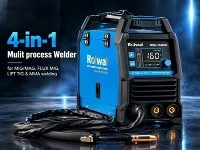


MIG Welding Machine
ROLWAL: a Professional MIG Welding Machine Manufacturer
Our company was established in 1990 and is located in Daxi, the hometown of pumps in China. We have self-operated import and export rights.
Variety of Products
We can provide customers with various types of water pumps, welders, and motors, such as centrifugal pumps, peripheral pumps, self-priming jet pumps, deep well submersible pumps, submersible sewage pumps, MMA welding machine, MIG welding machine, TIG welding machine. We can also provide portable car battery chargers.
Professional Production Equipment
Our factory is equipped with many types of equipment, including production lines, processing centers, testing centers, etc. We have also arranged professional production personnel to monitor all aspects to ensure the high quality of each product.
Rich Market Experience
Our company has established export trade relationships with customers in many countries and regions, and our products are sold to the Middle East, Southeast Asia, Europe, Africa, South America and other places. Our products have received favorable comments from many customers.
Multiple International Certifications
Various products such as water pumps, welding machines, and motors we produce have passed ISO9001 and CE certification. At the same time, we have professional design and production teams that continuously develop and innovate new products.
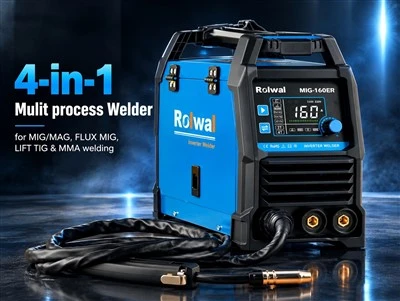


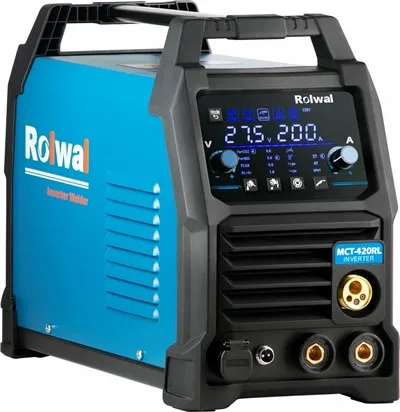


Metal inert gas welding (MIG welding) is one of several welding techniques that use electricity to melt and join pieces of metal. MIG welding is a sub-type of gas metal arc welding (GMAW), a process that’s been widely used since 1948. Since then, despite equipment details changing quite a bit, and reference to the process by various names (including gas metal arc welding, spray arc welding, flux-cored arc welding and short-circuit welding) the general principles remain the same. MIG welding machine is particularly versatile because you can use it to weld many different metals. These include carbon steel, stainless steel, aluminium, magnesium, copper, nickel, silicon bronze and other alloys.
How MIG Welding Works
Whether you weld in your garden shed, a Formula 1 team’s workshop, or using production-line robots in a massive factory, MIG welding works on the following principle. Using lots of electricity, an electrical arc (a short circuit) is created between an electrode wire (a positive anode) and the parent metal that’s being welded (a negative cathode). The arc melts the electrode wire, which is then deposited to create the weld. When the heat is removed, the weld pool cools, solidifies and form a new piece of fused metal – the weld is made. When you use a modern MIG welding machine like ours, spool-fed electrode wire is fed through a tensioning mechanism and into a co-axial supply line. This leads to a hand-held MIG welding gun – the MIG welding torch or ‘gun’. At the same time, a shielding gas (typically argon, carbon dioxide or a mixture) is fed along the same supply line to the gun. The gas protects the weld pool from atmospheric gases that would otherwise weaken the weld.
Metal Transfer Mode in MIG Welding
MIG welding has some distinct modes for transferring the metal wire to the weld pool. These variations allow you to have quality welds depending on the application, type of metal or finish.
Short-Circuit Welding (Aka Dip Transfer Or Microwire) – Electrical short-circuits are established as the metal wire touches the weld pool. To achieve this, MIG welding machines are operated with low voltage, keeping the size of the weld ball fairly small. The limitation in using short-circuit welding is its inability to weld thick materials.
Globular Transfer – The welding current and voltages are raised above the recommended maximum values, creating an uncontrolled short circuit. Molten metal droops into the weld pool and typically has a higher diameter than the wire feed itself. This aggressive method causes erratic movement to the weld which in turn generates spatter. Its use is limited to flat and horizontal welds and lack of fusion in the weld is quite common. Globular transfer mainly finds use when welding thicker materials since large droplets and high heat input allow for good penetration. However, high temperatures lead to changes in the metal’s microstructure and to the formation of heat affected zone (HAZ).
Spray Welding – Increasing the welding current and voltage further will cause a high deposition rate for the metal, almost similar to a water hose. This technique is optimal for joining thicker materials, allowing for greater penetration with tiny little droplets of molten metal. Spray welding offers strong, aesthetically good-looking welds with little spatter as no short circuits are occurring. High heat input restricts the use of this mode on thinner materials.
Pulsed Mode – This mode is generally used for welding stainless steel and aluminum. It combines the advantages of other forms of transfer while minimising their disadvantages. The material is transferred in a controlled droplet form. The pulses create spatter-free welds and a lower heat input allows using this method on thinner materials.
Materials Used in MIG Welding
Let’s take a look at MIG equipment and materials and their role in the process:
With MIG welding, the electrode carrying the current, also acts as a filler. There are 2 basic types of wire electrodes available according to the projects and metals involved:
Hard Wire: Used by most MIG users due to its affordability, ease of control and versatility at different angles. Typical hardwires comprise a 75:25 ratio of argon and carbon dioxide.
Flux-Cored Wire: The flux built in to the wire itself negates the need for shielding gas. This, in turn, makes MIG welding more suited to working outdoors and in windy conditions. On the downside, flux-covered wires create slag during welding which needs cleaning off.
As the metals fuse in the welding pool, shielding gas is supplied through the welding torch keeping the weld pool free from contamination without affecting the metal’s properties. Shielding gas selection in MIG welding depends on the material being welded and the application. The most commonly used are argon and helium sometimes mixed with other (semi-inert) gases, such as carbon dioxide, to reduce cost. Cheaper than argon and helium, carbon dioxide allows for deeper penetration but also creates more spatter in the weld pool. In specific situations, non-inert gases are used in very small quantities to further increase metal penetration. However, the resulting oxygen creates rust and oxidation on the weld can affect its quality.
A welding torch, or gun, is a specialised tool for fusing and melting metals. MIG torches are versatile in their application to a variety of metal types and thicknesses. MIG torches are divided into two groups:
Gas-Cooled Welding Torches: Overheating can become an issue so these torches are generally limited to minor projects.
Water-Cooled Welding Torches: Can be used at higher amperages and provide more power. They also offer smoother control over the contact tip of the nozzle. However, they cost 20-30% more than gas-cooled torches and require a water-cooled system to be installed in the welding machine.
There are 4 different nozzle types used in a welding torch: recessed, flush, protruding and adjustable. The choice is determined by the type of wire electrode being used.
Modern MIG welding equipment auto-corrects the current when the arc length and wire feed speed change, creating a stable weld puddle. These are your choices for both TIG and MIG welding:
DC Positive Polarity: In DCEP (direct current electrode positive) or reverse polarity, the electrons flow from the contact tip of the electrode to the base metal. This is the most widely used setting since it offers a stable arc, ensuring better bead quality, weld penetration, and less spatter. Suitable for welding both thick and thin materials.
DC Negative Polarity: In DCEN (direct current electrode negative) or straight polarity, the electrons travel from the base metal to the tip of the electrode wire. This method offers faster deposition rates than DCEP but it has several drawbacks such as lack of penetration and not enough heat in the weld pool. Not suitable for thicker materials but is sometimes used for welding thin metals.
AC Power: AC is hardly ever used in MIG welding. TIG welding of aluminium requires AC in which the machine is constantly switching between positive and negative currents. The alternating current provides a cleaning action to remove the oxide film present on the surface of the metal.
Many professional welders choose MIG welding over other welding techniques and machines. Metal inert gas welding is a process that can be applied either automatically or semi-automatic, and it’s a versatile technique that offers significant benefits for welders and various projects.
High Productivity in the Manufacturing Industry
MIG welding is a highly productive process perfect for the manufacturing industry, leading to higher profits, economic benefits, and less downtime due to efficiency. Shielded metal arc welding works quickly and consistently while providing smooth, clean welds that don’t require sanding or finishing to remove slag or debris. MIG welding also doesn’t require continuously changing rods, which keeps production steady and without unnecessary downtime.
Versatile With Different Metals and Materials
MIG welding equipment is versatile and works with various alloys and metals, including aluminum, mild steel, stainless steel, copper, magnesium, nickel, and iron. This type of welding is also available as semi-automatic or fully automatic robotic welding for fast, consistent results. It’s an excellent welding option for large manufacturing operations and small home welding projects and is ideal for many industries.
It’s a Clean and Efficient Welding Method
The arc welding process uses a shielding gas to protect the arc, which creates a clean transfer of metals, and little to no debris or slag, resulting in a clean finish. Unlike stick welding, there is no slag or spatter to remove, and clean-up between welding tasks is quick, reducing the time between operations. In cases where a MIG welding procedure leaves a bit of residue, it’s typically minimal and easy to clean without any interruption between projects.
Simple, Quality Welds
You’ll produce a better weld pool with clear visibility using a MIG welding technique. This process allows you to use the technique easily, with greater control, to create a more precise outcome. It’s not only more accurate but faster than most welding methods.
It Produces a Faster Welding Speed
The MIG welding process is fast, with a continuously fed wire, which allows you to create quality welds with two free hands. This advantage gives you greater control and the ability to use the welding gun more accurately, with better results.
Easy to Learn
It’s one of the most accessible welding techniques to learn due to the simplicity of the process. Beginners in the welding profession can learn how to use basic MIG welding within several hours, whereas new welders can understand the basics of this technique and how it works.
Common Types of MIG Welding Machines
Single Phase Entry Level (DIY) Type
Single-phase entry-level MIG welding equipment is designed for do-it-yourself (DIY) users and light-duty repair applications. It is highly portable and features a complete MIG welding package, including a MIG torch, work return clamp, and selected accessories. The equipment also has step-less current control and a turbo fan-cooled MIG welding unit with a non-live MIG torch and work return clamp. This type of MIG welding equipment is suitable for welding 0.6mm to 0.8mm mild steel wire on up to 5kg reels. Its portability makes it ideal for DIY and car body repairs, as it is easy to transport and operate. The main advantage of single-phase entry-level MIG welding equipment is its affordability, making it an excellent choice for beginners or those on a budget. It is also easy to use, and its compact size makes it ideal for smaller welding projects. However, there are some limitations to single-phase entry-level MIG welding equipment. Due to its low amperage output, it may not be suitable for welding thicker metals. It may also struggle to weld for extended periods, as it lacks the power and duty cycle of larger MIG welding machines.
3 Phase with Pulse Arc Control
3-phase MIG welding equipment packages with pulse arc control are designed to offer an infinitely variable power inverter welding machine for MIG/MAG welding of steels, stainless steels, and aluminium. This equipment is also suitable for welding using bronze wires, as recommended for the repair of car bodywork. The pulse arc control feature allows for greater control over the welding process, resulting in a more precise and consistent weld. These machines are capable of producing high-quality welds on thin materials, such as aluminium, comparable to the quality obtained on much thinner sections using GTAW. The equipment packages are normally supplied complete with a 4-roll drive wire feed unit, a water cooler/recirculation unit, and a MIG torch. The 4-roll drive wire feed unit ensures a steady and consistent wire feed, while the water cooler/recirculation unit prevents overheating of the equipment during prolonged use.
3 Phase Multi-Systems
3-phase multi-process MIG welding machines are versatile welding equipment that can perform multiple welding processes. They are available in various specifications, from conventional CC/CV systems to the more popular inverter technology MIG welding packages. These machines have outstanding arc characteristics on both constant current and constant voltage processes. This provides great welding versatility with Stick, MIG, and cored wires, with the option of a TIG facility in a single power source. They are ideal for welding in industries such as construction, fabrication, and shipbuilding. The advantage of 3-phase multi-process MIG welding machines is that they provide great flexibility and versatility in terms of welding processes, as they can perform different welding processes such as MIG, Stick, and TIG welding. They also have excellent arc characteristics, which produce quality welds. The disadvantages of using 3-phase multi-process MIG welding machines are that they are more expensive than single-phase MIG welding machines. They also require a 3-phase power supply, which may not be available in some locations.
Shop Fabrication & Manufacturing
Because shielding gas is required, MIG is not commonly used for field fabrication and repair since providing protection from draft and breeze is time-consuming and can be difficult. Instead, self-shielded processes such as FCAW-S or stick welding (SMAW) are more popular. The welding filler metal used may be solid or tubular. Tubular MIG welding wires/electrodes are often known as metal cored wires: they are a hollow tube filled with metal alloys. These tubular filler metals have some advantages over solid wires, such as potential deposition rate/productivity, although at the expense of per-pound filler metal cost. Metal cored wires are especially common in the fabrication of heavy equipment components and structural members. Both solid and metal cored wires produce little to no slag, post-weld clean-up time is minimal, meaning parts can often be sent to downstream processes such as painting using only a light scrub with a wire brush. This makes the process very attractive for applications that demand high productivity, such as manufacturing.
Common Metals
The MIG welding process is used for welding carbon and low alloy steels, aluminum, and stainless steel. This means that it is common to industries ranging from boat and shipbuilding to chemical refineries. Compared to steel and stainless steel wire, aluminum MIG wire takes special care in order to feed properly. Purpose-built components such as Teflon guides and liners, U-shaped drive rolls, and push-pull or spool guns are designed to help feed aluminum wire with less difficulty. Filler metals for stainless steel welding are available in a wide range of alloy compositions ranging from the most common austenitic alloys (for example, 308L for welding 304/304L) to more exotic duplex stainless steels. MIG welding wires are even available for nickel super alloys, although many of these are tubular metal cored wires.
Thin & Thick Materials
MIG welding is frequently used for welding thin materials thanks to the availability of small diameter wires - 0.023” to 0.035” - and pulsed waveforms. Both wire and waveform help provide a stable arc at the low amperages needed to produce a high-quality weld without burn-through or excessive weld size. Thin materials welded with MIG are often encountered when manufacturing automotive components. However, MIG is also an excellent process for the garage and home hobbyist. MIG welding also exhibits good deposition rates and good performance at medium-to-high amperages, which means it is a popular choice for thick materials in addition to thin ones. Because the process is more easily observed during welding and used handheld than “faster” processes such as submerged arc, one could argue that the process is much more versatile and allows tackling a complex assembly with a single process. However, when thick metals must be welded out-of-position frequently, the gas-shielded flux cored welding (FCAW-G) process is preferable, since the slag offered by these consumables facilitates welding at amperages that help ensure good fusion along with good productivity. Fortunately, MIG equipment is often suitable for FCAW with only a change in filler metal and drive roll type.
Pipe Welding
As mentioned, out-of-position welding may not be preferable for many MIG welding applications, but the process has exceptional performance when placing an open-root root pass on tubes and pipes. Because of the low amperages used, this may be done easily in- or out-of-position. Newer power sources have modified waveforms that help further the ease-of-use and weld quality root pass welding. MIG welding may not be used for higher amperage fill and cap passes on pipes in a fixed position, but it is extremely popular when the pipe can be rotated. Typically, pipes ranging in diameter from 2-24” are welded using MIG, although there is some overlap with other processes at either end of this range.
Automation & Mechanization
MIG is one of the most popular processes for automation and mechanization. This is largely because the process is “semi-automatic”, allowing ease in programming and obtaining a high operator factor. The MIG welding torch is quite light, allowing ease of mounting to a range of robot arms. Special power sources offer improved ease of integration into the robotic system and welding cell, high amperage output and duty-cycle for improved travel speeds and uptime. Large drums of wire can be used to minimize downtime spent changing filler metal packaging.
Basics of Choosing a MIG Welder
The selection of a right MIG welder for your needs is determined by many factors. Below is an overview of such basics.
Amperage and Time
The MIG welder is available in different types, depending on the amount of heat or amperage required to be produced for a particular period. In the case of light or thin metal, which needs less time for heating, a light-duty welder is a good choice. But thicker metals require nonstop heat for a long time which is possible with heavy duty gun. The difference in both types of guns is also found in their purchasing prices as well as the maintenance required for them. Light duty guns are required to be replaced more frequently as compared to heavy-duty guns.
Selection of MIG Welding Gas
The ideal combination of 25C or 75% argon and 25 % CO2 blend is a well-known “all-purpose” blend. For deeper penetration into thick metals 100% CO2 is required.Some MIG welders can also work with flux core welding wire only for feeding purposes. The MIG welder needs to hook up to a gas cylinder somehow. The cylinder is required because the shielding gas helps in producing an excellent weld without slag coating. Therefore, it is better to look for a MIG welder that can be connected to a gas source.
MIG Welding Voltage
Before choosing a MIG welder, it is equally important to have the right electric outlet. A typical home-based 110 volt MIG welder is best suited for light metal welding as it can be easily plugged into a usual domestic electric outlet. A 220-volt welder is required for heavy welding. Any fluctuation in electric supply may affect the feeding process.
MIG Spool Gun
A spool gun MIG welder is a preferable option if welding of aluminum is desired. It is not available for all MIG welders. An optional spool gun is also available to be connected with a MIG welder.
MIG Wire Selection
MIG wire selection is vital to effective MIG welding. Tensile strength is required to be attained during MIG welding using an appropriate type of wire. The deoxidizer makes the transition easy from weld to metal in this case. The wire diameter and its composition are also critical to consider. An oversized wire may make feeding difficult and tip blockage. An undersized wire also erodes the tip. Hence consistent diameter is very important for a constant flow of current. The wire must be changed if it is found rusty. A rusty wire also causes an interruption in feeding.
Cooling Mechanism
Another essential feature to look for in a MIG welder is whether it is air-cooled or water-cooled. The heat over the metal requires being dissipated either through air or water. In the case of light-duty welding, air cooling is sufficient where ambient air and gas can cool down the metal. Water-cooled guns are recommended for continuous long welds with 300-600 amp. But these guns are expensive and difficult to operate and maintain as compared to air-cooled guns.
Cost Effectiveness
While deciding about which MIG welder to choose, the welder with a complete package must be your choice. From the matter of cost to arc quality, everything counts in a MIG welder. The MIG welders with the most reasonable to the most expensive price ranges are available in the market depending on the features. The one you select must comply with your needs and purpose. It is not just the cost of the welder to be counted, but also the accessories along with it count too.
Our Certificate
Below are our certificate:


Our Factory
Below are our factory:


FAQ
Q: What are the main advantages of MIG welding?
Q: What are the differences between MIG and TIG welding?
Q: Which is better: a push or a pull technique?
Q: What is the proper wire stick-out?
Q: What amperage MIG welding gun is needed?
Q: How do I get the best results from my MIG welding wire?
Q: What makes a good MIG weld?
Q: What are the limitations of MIG welding?
Q: What metal is best for MIG welding?
Q: How do you prevent burn-through when MIG welding?
Q: Can I use a MIG welder without gas?
Q: Can you use a MIG welder outside?
Q: What is the angle for MIG welding?
Q: What is the minimum thickness for MIG welding?
Q: Why MIG welding is fast?
Q: Is MIG welding useful?
Q: When should I replace my MIG tip?