

In the world of welding, the choice between water - cooled and air - cooled MIG welders is a critical one, especially when considering the issue of overheating. As a supplier of water - cooled MIG welders, I've had extensive experience and in - depth knowledge about the performance of both types of welders in terms of heat resistance. This blog aims to explore whether water - cooled MIG welders are truly more resistant to overheating than air - cooled ones.
Understanding the Basics of MIG Welding and Heat Generation
MIG (Metal Inert Gas) welding is a popular welding process that uses a continuous solid wire electrode heated and fed into the weld pool from a welding gun. During the welding process, a significant amount of heat is generated. This heat is a by - product of the electrical arc that melts the metal, and it can pose challenges to the welder's performance and longevity.
Overheating in a MIG welder can lead to several problems. It can cause the internal components to expand, leading to misalignments and potential damage. The insulation on wires may degrade, increasing the risk of electrical shorts. In extreme cases, overheating can even cause the welder to shut down unexpectedly, disrupting the welding process and potentially ruining the workpiece.
How Air - Cooled MIG Welders Work and Their Heat Resistance
Air - cooled MIG welders rely on the surrounding air to dissipate heat. They typically have a built - in fan that blows air over the internal components, carrying away the heat. The design of air - cooled welders is relatively simple and cost - effective, making them a popular choice for small - scale welding operations, hobbyists, and light - duty industrial applications.
However, air - cooled welders have their limitations when it comes to heat resistance. The efficiency of air cooling depends on several factors, such as the ambient temperature, the airflow around the welder, and the duration and intensity of the welding. In hot environments or during long - term, high - amperage welding, the air may not be able to carry away the heat fast enough. As a result, the temperature inside the welder can rise rapidly, leading to overheating.
For example, if you are using an air - cooled MIG welder in a workshop where the ambient temperature is already high, say around 35°C (95°F), and you are performing continuous welding at a high amperage, the welder may struggle to maintain a safe operating temperature. The fan may work harder, but it may not be sufficient to prevent the internal components from overheating.
How Water - Cooled MIG Welders Work and Their Heat Resistance
Water - cooled MIG welders, on the other hand, use water as a cooling medium. They typically consist of a welding power source, a water - cooled torch, and a water - cooling system. The water - cooling system circulates water through the torch and other critical components, absorbing the heat and carrying it away.
Water has a much higher heat capacity than air, which means it can absorb more heat per unit volume. This makes water - cooled welders much more efficient at dissipating heat. Even during long - term, high - amperage welding, the water can continue to absorb the heat, keeping the internal components of the welder at a relatively low and stable temperature.
The water - cooling system in a water - cooled MIG welder usually includes a pump, a radiator, and a reservoir. The pump circulates the water through the system, the radiator cools the heated water by transferring the heat to the surrounding air, and the reservoir stores the water. This closed - loop system ensures a continuous and efficient cooling process.
For instance, in a heavy - duty industrial welding application where continuous welding at high amperages is required, a water - cooled MIG welder can maintain a stable operating temperature. Even if the ambient temperature is high, the water - cooling system can still effectively dissipate the heat generated during welding, reducing the risk of overheating.
Comparing the Heat Resistance of Water - Cooled and Air - Cooled MIG Welders
To better understand the difference in heat resistance between water - cooled and air - cooled MIG welders, let's look at some real - world scenarios.
In a short - term, low - amperage welding job, such as welding a small metal frame for a DIY project, an air - cooled MIG welder may work just fine. The heat generated is relatively low, and the air - cooling system can easily dissipate it. However, if you need to perform a long - term, high - amperage welding job, like welding large steel structures in a construction site, a water - cooled MIG welder is the better choice.
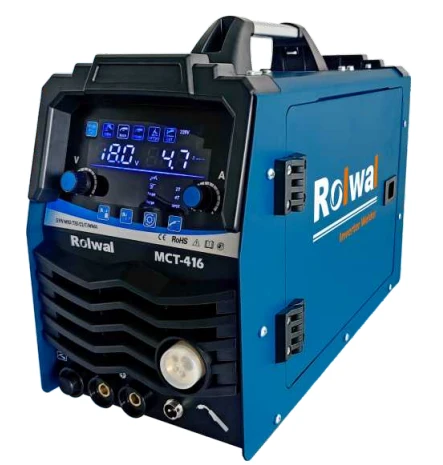

Studies have shown that water - cooled MIG welders can operate at higher duty cycles compared to air - cooled ones. The duty cycle is the percentage of time a welder can operate continuously within a 10 - minute period without overheating. For example, an air - cooled MIG welder may have a duty cycle of 20% at a certain amperage, which means it can only weld for 2 minutes out of every 10 minutes before it needs to cool down. In contrast, a water - cooled MIG welder may have a duty cycle of 60% or even higher at the same amperage, allowing for more continuous welding.
Another advantage of water - cooled MIG welders is their ability to maintain a more consistent welding performance. Overheating can cause fluctuations in the welding arc, leading to inconsistent weld quality. Since water - cooled welders are less prone to overheating, they can provide a more stable welding arc, resulting in higher - quality welds.
Applications Where Water - Cooled MIG Welders Shine
Water - cooled MIG welders are particularly suitable for applications where high - amperage, continuous welding is required. In the automotive industry, for example, water - cooled MIG welders are used to weld thick steel parts, such as chassis and engine components. The ability to maintain a stable operating temperature ensures high - quality welds and reduces the risk of production delays due to overheating.
In the shipbuilding industry, where large steel plates need to be welded together, water - cooled MIG welders are also the preferred choice. The long - term, high - amperage welding operations demand a welder that can withstand the heat and provide consistent performance.
Our Water - Cooled MIG Welders: A Reliable Solution
As a supplier of water - cooled MIG welders, we offer a range of products that are designed to provide superior heat resistance and performance. Our welders are equipped with advanced water - cooling systems that ensure efficient heat dissipation even in the most demanding welding environments.
We also offer other related products such as the Mig Stick Welder, which combines the functions of MIG and stick welding, and the Multifunction Welder MMA MIG CUT TIG, which offers multiple welding processes in one machine. For those who need a specific type of MIG welding, our CO2 Shielding Gas MIG is a great option.
Conclusion and Call to Action
In conclusion, water - cooled MIG welders are indeed more resistant to overheating than air - cooled ones, especially in high - amperage, continuous welding applications. Their superior heat - dissipation capabilities, higher duty cycles, and more consistent welding performance make them a better choice for heavy - duty industrial applications.
If you are in the market for a reliable MIG welder that can handle the heat, we invite you to contact us for more information. Our team of experts can help you choose the right water - cooled MIG welder for your specific needs. Whether you are a small business looking to upgrade your welding equipment or a large industrial enterprise in need of high - performance welders, we have the solutions for you. Let's start a conversation about how our water - cooled MIG welders can improve your welding operations.
References
- Welding Handbook, American Welding Society
- Industrial Welding Technology, McGraw - Hill Education
- Journal of Manufacturing Processes, various issues on welding technology


