

Hey there! As a supplier of Battery Charge products, I often get asked about the capacity of a typical power bank. It's a super important question, especially in today's world where we're constantly on the go and our devices need a quick top - up.
Let's start by understanding what power bank capacity actually means. The capacity of a power bank is usually measured in milliampere - hours (mAh). It represents the amount of electrical charge the power bank can store. Think of it like a fuel tank in a car. The bigger the tank, the more fuel it can hold, and the farther the car can go. Similarly, a power bank with a higher mAh capacity can charge your devices more times.
Now, what's considered a typical power bank capacity? Well, in the market, you'll commonly find power banks with capacities ranging from around 3000 mAh to 20000 mAh or even higher.
A 3000 - 5000 mAh power bank is pretty small and compact. It's great for those who just need a quick boost for their smartphones. For example, if your smartphone battery has a capacity of around 3000 mAh, a 5000 mAh power bank can give it almost a full charge. These power banks are perfect for short trips or when you just need a little extra juice to get you through the day. You can easily slip them into your pocket or a small purse. Check out our Compact and Portable Battery Charger for a great option in this category.
Moving up the scale, power banks with capacities between 10000 - 15000 mAh are more versatile. They can charge a smartphone multiple times. Let's say your phone has a 3500 mAh battery. A 10000 mAh power bank can charge it about two to three times. These power banks are also suitable for charging tablets. Tablets usually have larger batteries, often in the range of 6000 - 10000 mAh. So, a 15000 mAh power bank can give a tablet a significant charge, although it might not fully charge it in one go.
If you're someone who uses a lot of power - hungry devices or you're going on a long trip without easy access to a power outlet, a power bank with a capacity of 20000 mAh or more is the way to go. These high - capacity power banks can charge multiple devices simultaneously. For instance, you could charge your smartphone, tablet, and even a wireless earbud case all at the same time. They're like a mini - power station in your bag.
But it's not just about the mAh number. There are a few other factors that affect how much charge your device will actually get from a power bank. One of the main factors is the conversion efficiency. When a power bank transfers its stored energy to your device, there's always some energy loss. This is due to things like heat generation and the internal resistance of the power bank's circuitry. On average, the conversion efficiency of a power bank is around 70% - 85%. So, if you have a 10000 mAh power bank with an 80% conversion efficiency, the effective capacity that can be transferred to your device is about 8000 mAh.
Another thing to consider is the output voltage and current. Different devices require different voltages and currents to charge properly. Most smartphones can charge at 5V, but some newer models support fast charging at higher voltages like 9V or 12V. Power banks that support fast charging usually have multiple output ports with different voltage and current settings. Our Quick Start Car Battery Charger is a great example of a charger that can handle different charging requirements.

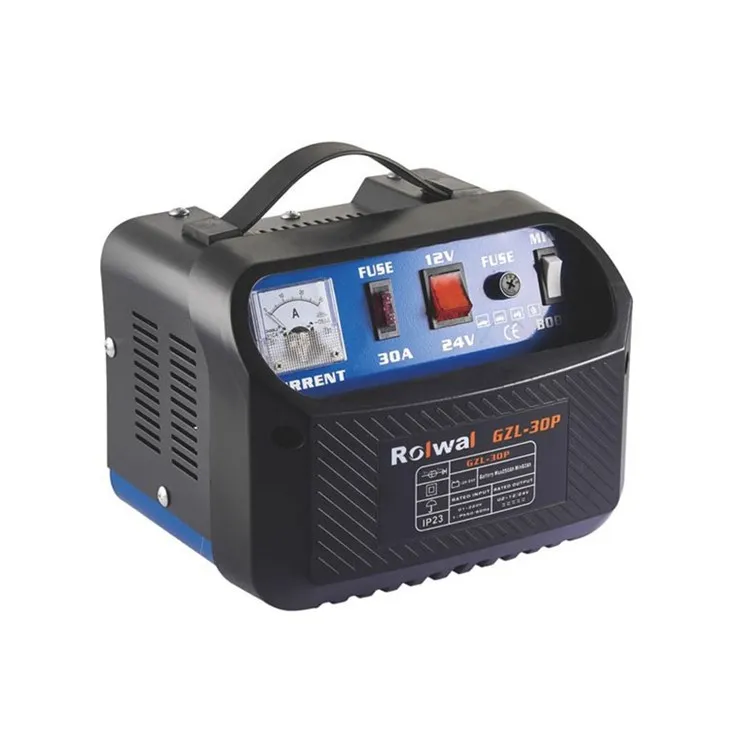
When choosing a power bank, you also need to think about the type of battery it uses. The most common type is lithium - ion (Li - ion) or lithium - polymer (Li - Po) batteries. Li - ion batteries are widely used because they have a high energy density, which means they can store a lot of energy in a relatively small space. Li - Po batteries, on the other hand, are more flexible in shape and are often used in thinner and more lightweight power banks.
Now, let's talk about how to calculate how many times a power bank can charge your device. First, you need to know the battery capacity of your device in mAh. Then, divide the effective capacity of the power bank (the mAh number multiplied by the conversion efficiency) by the battery capacity of your device. For example, if your phone has a 3000 mAh battery and you have a 10000 mAh power bank with an 80% conversion efficiency (so the effective capacity is 8000 mAh), you can calculate the number of charges as 8000 ÷ 3000 ≈ 2.67. So, you can get about 2 - 3 full charges for your phone from that power bank.
As a Battery Charge supplier, I know that finding the right power bank for your needs can be a bit overwhelming. But I'm here to help. Whether you're looking for a small, portable power bank for your daily commute or a high - capacity one for a long - distance trip, we have a wide range of products to choose from.
If you're interested in our power banks or have any questions about power bank capacity and which one is right for you, don't hesitate to reach out. We can have a detailed discussion about your specific requirements and help you make the best choice.
In conclusion, the capacity of a typical power bank can vary widely, and it's important to consider your own needs, the devices you want to charge, and other factors like conversion efficiency and output voltage. With the right power bank, you'll never have to worry about your devices running out of juice again.
References
- Battery University: A great resource for understanding battery technology and capacity.
- Consumer Reports: Provides reviews and comparisons of different power banks on the market.


