

When it comes to welding technology, dual pulse welding machines have emerged as a significant advancement, offering enhanced control and quality in welding processes. As a leading supplier of Dual Pulse Welding Machines, I often encounter inquiries from customers about the differences between DC dual pulse welding machines and AC dual pulse welding machines. In this blog post, I will delve into the technical aspects, applications, and advantages of each type to help you make an informed decision for your welding needs.
Technical Principles
DC Dual Pulse Welding Machine
A DC dual pulse welding machine operates on a direct current (DC) power supply. The dual - pulse feature means that it alternates between two different pulse currents: a high - peak current pulse and a low - background current pulse. The high - peak current is used to melt the base metal and the filler wire, creating a weld pool. It provides the energy necessary for penetration and fusion. The low - background current, on the other hand, sustains the arc and allows the weld pool to solidify slightly between pulses. This pulsing pattern helps to control the heat input, reducing the risk of overheating and distortion in the welded joint.
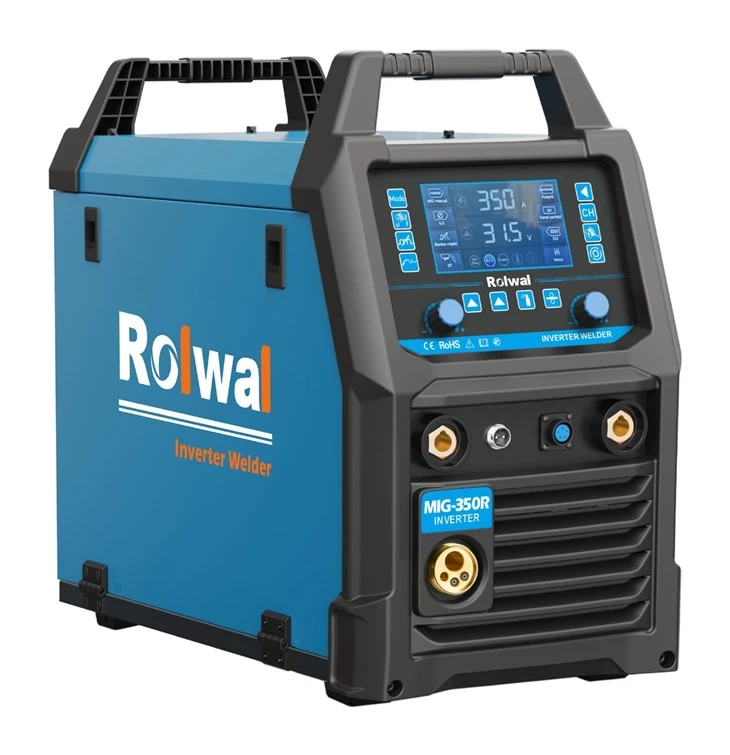

The DC output is unidirectional, which means that the current flows in one direction only. This characteristic is beneficial for welding materials that have a consistent electrical conductivity and require a stable arc. For example, when welding mild steel or stainless steel, the DC dual pulse welding machine can provide a smooth and stable arc, resulting in high - quality welds with good bead appearance.
AC Dual Pulse Welding Machine
An AC dual pulse welding machine, as the name suggests, uses an alternating current (AC) power supply. Similar to the DC version, it also has a dual - pulse function with high - peak and low - background current pulses. However, the alternating nature of the current adds an extra dimension to the welding process.
In an AC dual pulse welding machine, the current alternates between positive and negative polarities. The positive polarity is effective for melting the base metal and the filler wire, similar to the high - peak current in a DC machine. The negative polarity has a cleaning effect on the surface of the metal. It helps to remove oxides and contaminants from the welding surface, which is crucial when welding materials such as aluminum. Aluminum forms a tough oxide layer on its surface, which can interfere with the welding process. The AC dual pulse machine's negative polarity can break down this oxide layer, ensuring a clean and strong weld.
Applications
DC Dual Pulse Welding Machine
DC dual pulse welding machines are widely used in industries where welding of ferrous metals is common.
- Automotive Industry: In automotive manufacturing and repair, DC dual pulse machines are used to weld mild steel and stainless - steel components. For example, when welding car frames, body panels, or exhaust systems, the controlled heat input of the DC dual pulse can prevent warping of the thin metal sheets, ensuring the structural integrity of the vehicle.
- General Fabrication: In general metal fabrication shops, these machines are used to weld a variety of steel structures, such as brackets, frames, and machinery parts. The stable arc and high - quality welds produced by DC dual pulse machines make them suitable for mass production and demanding applications.
You can explore some of our products related to these applications, such as the Flux Cored Wire Feed Welder and the Multifunction Lcd Mig Welding Machine.
AC Dual Pulse Welding Machine
AC dual pulse welding machines are particularly well - suited for welding non - ferrous metals, especially aluminum.
- Aerospace Industry: In the aerospace sector, aluminum is a widely used material due to its high strength - to - weight ratio. AC dual pulse welding machines are used to weld aluminum components such as aircraft wings, fuselages, and engine parts. The ability to clean the aluminum surface during welding ensures the quality and reliability of the welds, which are critical for the safety of the aircraft.
- Marine Industry: In the marine industry, aluminum is also commonly used for boat hulls, decks, and other components. The AC dual pulse welding machine's anti - oxidation and high - quality welding capabilities make it an ideal choice for welding aluminum in a marine environment, where corrosion resistance is essential.
Our MIG MAG Double Pulse Synergic Spot Welder is a great option for such applications.
Advantages
DC Dual Pulse Welding Machine
- Stable Arc and Weld Quality: The DC current provides a stable arc, resulting in uniform weld beads with good penetration. This stability reduces the occurrence of welding defects such as porosity, lack of fusion, and excessive spatter.
- Energy Efficiency: DC dual pulse welding machines are generally more energy - efficient than some other types of welding machines. The controlled pulsing of the current reduces the overall heat input, which in turn reduces energy consumption and the risk of overheating the welding equipment.
- Ease of Use: They are relatively easy to operate, especially for welders who are familiar with DC welding processes. The settings are intuitive, and the learning curve is relatively short, making them suitable for both novice and experienced welders.
AC Dual Pulse Welding Machine
- Oxide Cleaning: As mentioned earlier, the alternating current's negative polarity can clean the surface of non - ferrous metals, eliminating the need for pre - cleaning operations in many cases. This not only saves time but also improves the quality of the welds.
- Versatility: AC dual pulse welding machines can be used for both AC and DC welding, providing greater flexibility in welding different types of metals. For example, they can be used to weld aluminum (AC mode) and steel (DC mode) with the same machine, reducing the need for multiple welding equipment.
- Reduced Heat - Affected Zone: The dual - pulse feature in combination with the AC current helps to reduce the heat - affected zone. This is important for materials that are sensitive to heat, as it minimizes the distortion and changes in the material's properties near the weld.
Making the Right Choice
When choosing between a DC dual pulse welding machine and an AC dual pulse welding machine, several factors need to be considered.
- Type of Metal: If you primarily weld ferrous metals such as steel, a DC dual pulse welding machine is likely the better choice. However, if you work with non - ferrous metals, especially aluminum, an AC dual pulse welding machine is essential.
- Welding Application: Consider the specific requirements of your welding application. For high - precision welding in industries such as aerospace or automotive, the advanced features of an AC dual pulse machine may be necessary. For general fabrication and repair work, a DC dual pulse machine may be more cost - effective and sufficient.
- Budget: AC dual pulse welding machines are generally more expensive than DC dual pulse machines due to their more complex technology. You need to balance your budget with the performance requirements of your welding projects.
Contact for Purchase and Consultation
As a professional supplier of Dual Pulse Welding Machines, we are committed to providing high - quality products and excellent customer service. Whether you need a DC dual pulse welding machine or an AC dual pulse welding machine, we have the right solution for you. If you have any questions about our products, or if you are interested in purchasing a welding machine, please feel free to contact us. Our team of experts is ready to assist you in making the best choice for your welding needs.
References
- Welding Handbook, American Welding Society.
- "Advances in Dual Pulse Welding Technology", Journal of Welding Research.
- Manufacturer's technical documents for dual pulse welding machines.


