

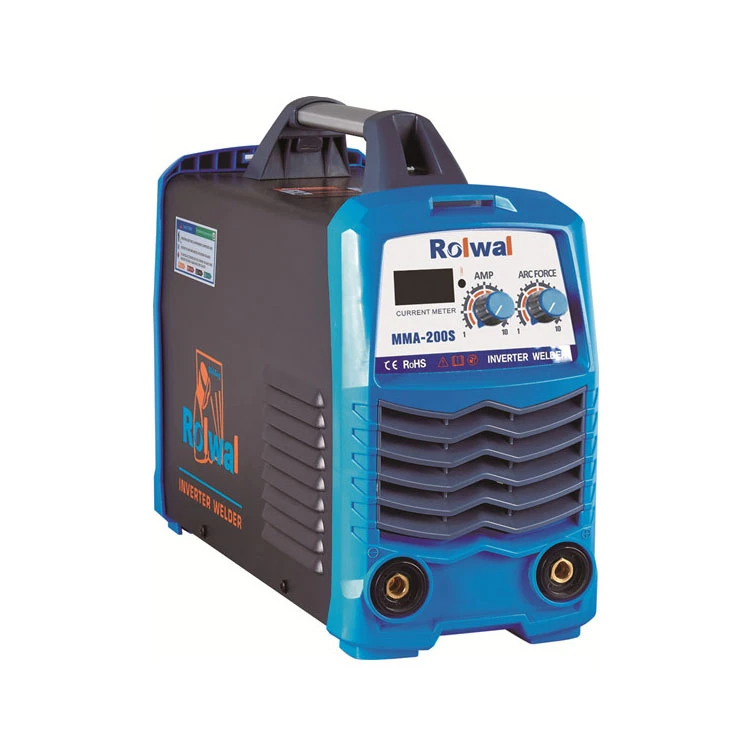
When operating a Bx AC Welding Machine, proper ventilation is not just a recommendation; it's a crucial safety measure that directly impacts the welder's health and the overall efficiency of the welding process. As a trusted supplier of high - quality Bx AC Welding Machines, including top - notch products like the Rolwal Rolwal - mini - arc - stick - welder, MMA VRD Lift TIG Portable Welder, and Mma Wide Voltage Machine, we understand the significance of ventilation in welding operations.
The Hazards of Inadequate Ventilation
Welding, especially with a Bx AC Welding Machine, generates a variety of harmful substances. The welding arc produces fumes that contain metal oxides, such as iron, manganese, and chromium. These fumes can be inhaled by the welder, leading to serious health problems over time. For example, long - term exposure to manganese fumes can cause neurological disorders similar to Parkinson's disease. Iron oxide fumes can lead to a condition known as siderosis, which affects the lungs.
In addition to metal fumes, welding also produces gases like ozone, nitrogen oxides, and carbon monoxide. Ozone is a highly reactive gas that can irritate the respiratory system, cause shortness of breath, and even damage the lungs. Nitrogen oxides can cause respiratory irritation, coughing, and in severe cases, pulmonary edema. Carbon monoxide is a colorless, odorless gas that can be extremely dangerous as it binds to hemoglobin in the blood, reducing the blood's ability to carry oxygen. This can lead to headaches, dizziness, nausea, and in high concentrations, it can be fatal.

Without proper ventilation, these harmful substances can accumulate in the welding area, posing a significant risk to the welder's health. Moreover, poor ventilation can also affect the quality of the weld. The presence of excessive fumes and gases can interfere with the welding arc, causing porosity in the weld and reducing its strength.
Recommended Ventilation Methods
Local Exhaust Ventilation
Local exhaust ventilation (LEV) is one of the most effective ways to control welding fumes and gases. This system works by capturing the fumes and gases at the source, as close to the welding arc as possible. LEV systems typically consist of a hood or nozzle placed near the welding point, a duct system to transport the fumes and gases away, and a fan to provide the necessary airflow.
There are different types of LEV systems suitable for Bx AC Welding Machines. One common type is the portable extraction arm. These arms are flexible and can be easily positioned to capture the fumes directly from the welding area. They are ideal for small - scale welding operations or for welders who need to move around frequently.
Another type of LEV system is the fixed - position hood. These hoods are installed above the welding workstation and are designed to capture the fumes as they rise. Fixed - position hoods are more suitable for large - scale, stationary welding operations.
When selecting an LEV system, it's important to consider the size of the welding area, the type of welding being done, and the volume of fumes and gases generated. The system should be designed to provide an adequate capture velocity at the source. A capture velocity of at least 100 - 200 feet per minute (fpm) is generally recommended for welding operations.
General Ventilation
General ventilation is also an important part of a comprehensive ventilation strategy. This method involves diluting the concentration of fumes and gases in the entire welding area by introducing fresh air and removing the contaminated air. General ventilation can be achieved through natural ventilation, such as opening windows and doors, or through mechanical ventilation systems.
Natural ventilation is a simple and cost - effective way to provide some level of ventilation. However, it may not be sufficient on its own, especially in areas with limited air movement or during adverse weather conditions. Mechanical ventilation systems, on the other hand, offer more control over the airflow. These systems typically consist of fans and ductwork that can be adjusted to provide the desired amount of fresh air exchange.
For a Bx AC Welding Machine, a general ventilation rate of at least 20 - 30 air changes per hour is recommended. This means that the entire volume of air in the welding area should be replaced 20 - 30 times per hour. This helps to keep the concentration of harmful substances below the permissible exposure limits.
Factors Affecting Ventilation Requirements
Several factors can influence the ventilation requirements when using a Bx AC Welding Machine.
Welding Process and Materials
Different welding processes generate different amounts of fumes and gases. For example, shielded metal arc welding (SMAW), which is commonly used with Bx AC Welding Machines, produces more fumes compared to some other welding processes. The type of welding electrode also plays a role. Electrodes with a high alloy content tend to produce more fumes. Similarly, the base material being welded can affect the composition and quantity of fumes. Welding on stainless steel, for instance, produces more chromium and nickel fumes compared to mild steel.
Welding Area Size
The size of the welding area is an important factor in determining the ventilation requirements. Larger areas require more powerful ventilation systems to ensure adequate air movement and dilution of harmful substances. In a small, enclosed welding booth, a relatively small - scale local exhaust ventilation system may be sufficient. However, in a large open - floor welding shop, a combination of local exhaust ventilation and general ventilation may be needed.
Welding Duration
The length of time the Bx AC Welding Machine is in use also affects ventilation requirements. Longer welding sessions mean that more fumes and gases are generated over time. Therefore, for continuous or long - term welding operations, more efficient ventilation systems may be required to maintain a safe working environment.
Designing an Effective Ventilation System
When designing a ventilation system for a Bx AC Welding Machine, it's important to follow a systematic approach.
First, conduct a thorough assessment of the welding area. Measure the size of the area, identify the location of the welding workstations, and determine the type of welding processes and materials that will be used. This information will help in selecting the appropriate ventilation equipment.
Next, select the right combination of local exhaust ventilation and general ventilation systems. As mentioned earlier, local exhaust ventilation should be used to capture the fumes at the source, while general ventilation should be used to dilute the remaining fumes and gases in the area.
Ensure that the ventilation system is properly installed and maintained. The ductwork should be sealed to prevent leaks, and the fans should be regularly inspected and serviced to ensure they are operating at their optimal capacity. It's also important to monitor the ventilation system regularly to ensure that it is providing the required airflow and capturing the fumes effectively.
Conclusion
Proper ventilation is essential when using a Bx AC Welding Machine. It protects the welder's health by removing harmful fumes and gases from the welding area and also helps to ensure the quality of the weld. As a supplier of high - quality Bx AC Welding Machines, we are committed to providing our customers with not only reliable welding equipment but also the knowledge and resources to ensure a safe and efficient welding environment.
If you are in the market for a Bx AC Welding Machine or need advice on ventilation systems for your welding operations, we invite you to contact us. Our team of experts is ready to assist you in selecting the right equipment and designing an effective ventilation solution.
References
- American Conference of Governmental Industrial Hygienists (ACGIH). Threshold Limit Values (TLVs) for Chemical Substances and Physical Agents and Biological Exposure Indices.
- Occupational Safety and Health Administration (OSHA). Welding, Cutting, and Brazing Standards.
- National Institute for Occupational Safety and Health (NIOSH). Criteria for a Recommended Standard: Occupational Exposure to Welding Fumes and Gases.


