

When it comes to welding thin metal sheets, many welders often wonder if a MIG (Metal Inert Gas) welding machine is a suitable choice. As a MIG welding machine supplier, I've encountered this question numerous times. In this blog, I'll delve into the feasibility of using a MIG welding machine for thin metal sheets, exploring the advantages, challenges, and best practices.
Advantages of Using a MIG Welding Machine for Thin Metal Sheets
1. High Welding Speed
MIG welding is known for its relatively high welding speed. When working with thin metal sheets, this can be a significant advantage. Since thin sheets are more prone to heat distortion, the ability to complete the weld quickly helps minimize the amount of heat input into the metal. This reduces the risk of warping and ensures that the integrity of the thin sheet is maintained. For example, in automotive body repair where thin steel sheets are commonly used, MIG welding can efficiently join the parts together, saving time and labor costs.
2. Ease of Use
MIG welding is generally considered one of the easier welding processes to learn. The wire feeder mechanism in a MIG welding machine continuously feeds the welding wire, eliminating the need for the welder to constantly manipulate the electrode as in other processes like stick welding. This makes it more accessible for novice welders, especially when working on thin metal sheets that require precise control. With a little practice, welders can achieve consistent and high - quality welds on thin materials.
3. Versatility
MIG welding machines can be used with a variety of shielding gases, depending on the type of metal being welded. For thin metal sheets, argon - based shielding gases are often preferred as they provide a stable arc and help prevent oxidation. Additionally, MIG welding can be used on different types of metals, including steel, aluminum, and stainless steel. This versatility makes it a valuable tool for fabricators who work with a range of thin metal materials.
Challenges of Using a MIG Welding Machine for Thin Metal Sheets
1. Heat Input
One of the main challenges when using a MIG welding machine on thin metal sheets is controlling the heat input. Thin sheets have a low heat capacity, which means they can easily overheat and melt through. Excessive heat can also cause the metal to warp or distort, leading to poor - quality welds. To overcome this challenge, welders need to carefully adjust the welding parameters, such as the voltage, wire feed speed, and travel speed.
2. Wire Selection
Choosing the right welding wire is crucial when welding thin metal sheets. The wire diameter should be appropriate for the thickness of the sheet. Using a wire that is too thick can result in excessive heat input and a rough weld bead, while a wire that is too thin may not provide enough filler material. For example, for very thin sheets (less than 1 mm), a 0.6 mm or 0.8 mm diameter wire is often recommended.
3. Joint Preparation
Proper joint preparation is essential for successful MIG welding of thin metal sheets. The edges of the sheets need to be clean and free of rust, oil, and other contaminants. Any irregularities in the joint can affect the quality of the weld. Additionally, the fit - up of the joint should be precise to ensure good fusion between the sheets.
Best Practices for Using a MIG Welding Machine on Thin Metal Sheets
1. Set the Correct Welding Parameters
As mentioned earlier, controlling the heat input is crucial. Start by selecting a low voltage and a relatively slow wire feed speed. You can then make small adjustments based on the appearance of the weld bead. A good rule of thumb is to aim for a smooth, even weld bead without excessive spatter or burn - through. For example, when welding 0.8 mm thick steel sheets, a voltage setting of around 18 - 20 volts and a wire feed speed of 3 - 4 m/min may be appropriate.
2. Use a Push Technique
When welding thin metal sheets, using a push technique (also known as forehand welding) is recommended. This involves pushing the welding gun in the direction of the weld. The push technique helps to keep the heat concentrated on the leading edge of the weld pool, reducing the risk of burn - through and providing better control over the weld bead.
3. Practice Short Welds
Instead of attempting long continuous welds, it's often better to make short, intermittent welds. This allows the metal to cool between welds, reducing the overall heat input and minimizing the risk of distortion. You can then stitch the short welds together to form a continuous joint.
4. Select the Right Equipment
Investing in a high - quality MIG welding machine is essential for welding thin metal sheets. Our 3 Phase Mig Welding Machine offers precise control over the welding parameters, making it suitable for delicate welding tasks. The LCD Screen All in One MIG/MMA/TIG/CUT provides a user - friendly interface, allowing welders to easily adjust the settings. And the Mig Welder Gas Digital offers digital control for accurate and consistent welding.
Conclusion
In conclusion, a MIG welding machine can be effectively used for thin metal sheets, but it requires careful consideration of the challenges and the implementation of best practices. With the right equipment, proper parameter settings, and skillful technique, welders can achieve high - quality welds on thin materials.
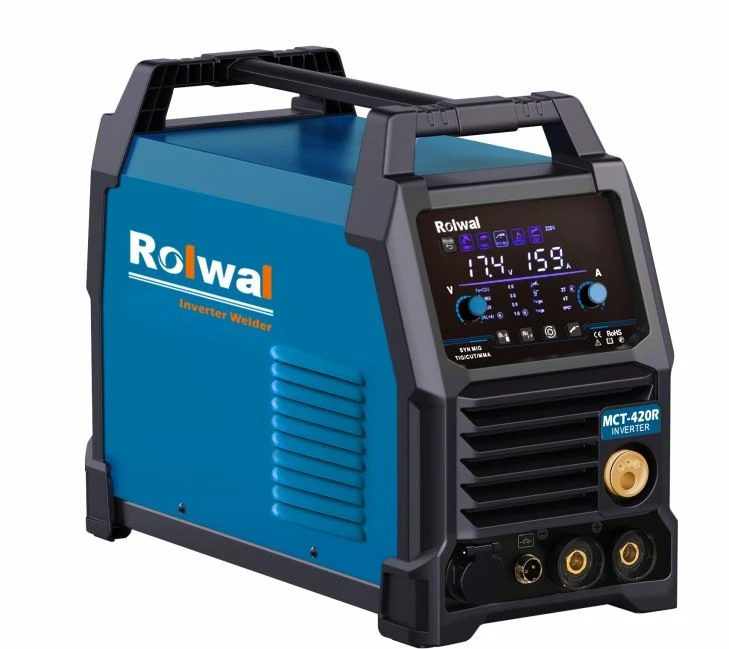

If you're interested in purchasing a MIG welding machine for your thin metal sheet welding projects, we invite you to contact us for a detailed discussion. Our team of experts is ready to assist you in selecting the most suitable machine for your needs and providing you with the necessary technical support.
References
- AWS Welding Handbook, Volume 1: Welding Science and Technology. American Welding Society.
- Welding Metallurgy and Weldability of Stainless Steels. John C. Lippold, David J. Kotecki.


