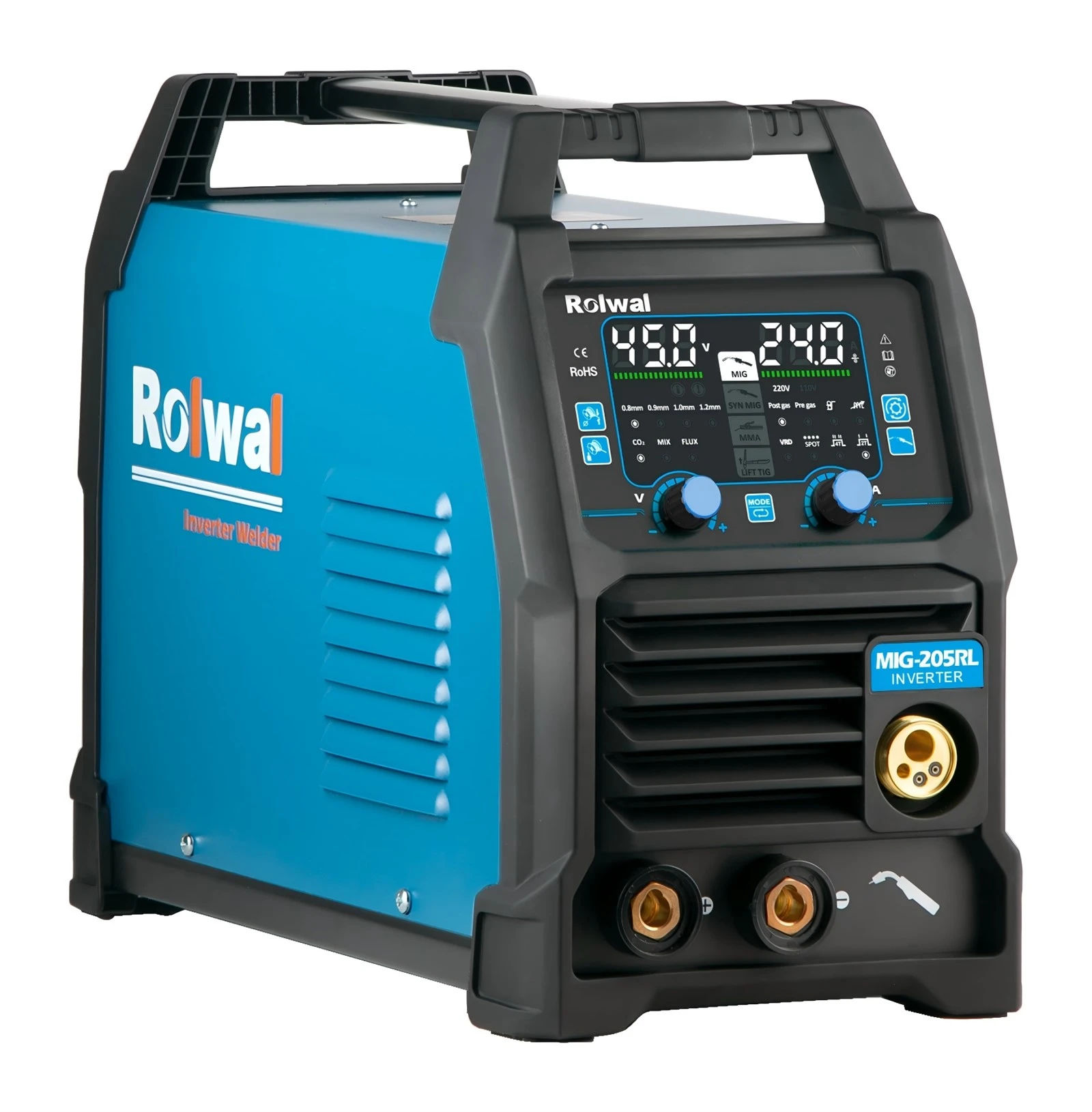
Wire jamming is one of the most common operational issues in MIG welding systems. It not only interrupts productivity but can also cause premature wear to components such as drive rolls, liners, and torches. From a professional perspective, wire jamming is usually the result of **mechanical mismatch, improper setup, or poor consumable quality**. The main causes can be summarized as follows:
1. Incorrect Drive Roll Selection or Pressure
Using the wrong type or size of drive rolls for the welding wire is a primary cause of wire feeding problems.
* **V-groove rolls** are suitable for solid steel wire
* **U-groove rolls** are recommended for soft aluminum wire
* **Knurled rolls** are typically used for flux-cored wire
Excessive drive roll pressure can deform the wire, while insufficient pressure can cause slippage-both leading to wire jams, commonly known as *bird-nesting*.
2. Worn or Contaminated Torch Liner
The liner guides the wire from the feeder to the contact tip. Over time, liners can become worn, kinked, or contaminated with metal dust and debris. This increases friction and resistance, making smooth wire feeding impossible. Liners must match the wire diameter and be replaced regularly.
3. Poor Wire Quality or Inconsistent Wire Diameter
Low-quality welding wire often has poor surface finish, rust, or inconsistent diameter. These defects significantly increase drag inside the liner and contact tip, leading to unstable feeding and frequent jamming.
4. Contact Tip Issues
A worn, oversized, or improperly matched contact tip can cause the wire to stick or arc irregularly. Spatter buildup inside the tip can also restrict wire movement. Regular inspection and timely replacement of contact tips are essential.
5. Improper Torch Cable Routing
Sharp bends, excessive cable length, or twisted torch cables increase friction inside the liner. MIG torches should be routed as straight as possible, especially when welding with soft wires such as aluminum.
6. Inadequate Wire Spool Tension
If spool tension is set too tight, it overloads the drive motor; if too loose, the spool may overrun when feeding stops, causing tangling. Proper spool braking ensures stable and consistent wire feeding.
7. Incorrect Welding Parameters
Improper settings-such as mismatched wire feed speed and voltage-can cause burn-back, where the wire melts into the contact tip. This instantly stops wire feeding and often results in a jam.
---
Conclusion
Wire jamming in MIG welding machines is rarely caused by a single factor. It is usually the result of **multiple small setup or maintenance issues combined**. Proper component matching, routine maintenance, high-quality consumables, and correct parameter settings are the key to ensuring stable wire feeding and maximizing welding efficiency.